
English 


Views: 222 Author: Kingford Scissors Publish Time: 2026-04-20 Origin: Site


For barbers, hairdressers, and beauty brands, German scissor manufacturers have a unique reputation: they combine robust steel, long-term cutting stability, and industrial-level quality control. While Japanese scissors often dominate conversations about ultra-sharp convex blades, German shears have become the workhorse tools in busy barbershops and salons across Europe and beyond. [europages.co]
In this guide, you will learn:
- Who the best German scissor manufacturers are for professional use. [europages.co]
- The difference between German and Japanese scissors, explained in practical, everyday terms.
- How to choose the right blade edge and steel for your cutting style. [alibaba]
- Why many global brands quietly rely on OEM partners like Kingford Homeware Co., Ltd. for private-label German-style scissors. [ydscissors]

German scissors stand out because of steel hardness, edge geometry, and durability under heavy load. [rudolf-med]
Key characteristics of German professional scissors:
- Harder, more robust steel (often high-carbon or stainless tool steel), designed to endure thousands of heavy cuts per week. [alibaba]
- Beveled or micro‑serrated edges, which grip hair firmly instead of letting it slide.
- Excellent performance in scissor‑over‑comb work, blunt cutting, and fast barbering techniques. [europages.co]
- Higher tolerance to minor misuse, such as cutting coarser or slightly drier hair sections in high-volume shops.
By contrast, Japanese scissors usually focus on convex edges and extreme sharpness, which are superb for slide cutting and precision texturizing but more fragile under abuse.
Best use cases for German scissors:
- High‑traffic barbershops focused on classic fades, tapers, and heavy scissor‑over‑comb.
- Entry‑level and mid‑level professionals who need forgiving tools while they build technique.
- Salons where durability and low maintenance are as important as finesse. [europages.co]
The original article highlights two main German hair-scissor names: Jaguar and Glück, with additional historical context around Tondeo. Below is a clarified, expert-view summary.
Jaguar began in 1931 as the "City of Blades", a family business focused on blades, knives, and cutting tools in Germany's traditional metalworking region. In 1967, they introduced hairdressing scissors, then rebranded under the Jaguar name as the product line expanded.
Key milestones:
- 1931 – Foundation as a family blade business.
- 1967 – Launch of hairdressing scissors.
- 2004 – Jagaur becomes part of Zwilling J.A. Henckels, a global knife and cutlery group, while keeping the Jaguar brand and product positioning in the hair industry.
- 2007–2011 – Jaguar's close association and eventual full integration with Tondeo under the Zwilling Group.
Why professionals choose Jaguar:
- Wide model range for barbers and stylists at different price points.
- Proven industrial property rights and patented technologies, reinforcing its position as a leading manufacturer.
- Strong presence in barbershops due to the toughness of German steel in heavy scissor‑over‑comb work. [europages.co]
Tondeo is another German hairdressing scissor company that eventually merged structurally with Jaguar under the Zwilling Group, forming a separate division focused on hair professional tools.
Professionals often view:
- Jaguar as an accessible, mainstream, yet high-quality option.
- Tondeo as a more specialized, design and technology‑driven brand aimed at advanced stylists. [rudolf-med]
Unlike Jaguar, Glück is a newer German manufacturer but has quickly gained attention for lightweight, affordable shears designed with beginners and intermediate barbers in mind.
Key characteristics of Glück scissors:
- Lightweight feel to reduce hand fatigue during training and long shifts.
- Serrated edges to prevent hair from slipping—useful when students or juniors are still perfecting tension and sectioning.
- Affordable price positioning, making it a realistic first "real" pair of German scissors for apprentices.
The brand name "Glück" means "happiness" in German, reflecting the founders' goal: tools that feel joyful, safe, and reliable in everyday use.
The original article's explanation of blade edges is useful, but below is a more structured, professional breakdown that is easier to act on.
1. Convex Edge (mostly Japanese):
- Extremely sharp, smooth edge profile.
- Ideal for slide cutting, point cutting, feathering, and soft, seamless texture work.
- Requires careful handling and more frequent, expert sharpening.
2. Semi‑Convex Edge (hybrid):
- Middle ground between convex and beveled.
- Offers a balance of sharpness and durability.
- Suitable for general salon work where you mix blunt and soft‑texture techniques.
3. Beveled Edge (classic German):
- Traditional, cost‑effective edge style.
- Often paired with micro‑serration on one or both blades.
- Excellent for blunt cutting, scissor‑over‑comb, and dry detail work where you do not want hair to slide.
- Not suitable for slice cutting or aggressive point cutting, as the serration will grab and pull hair.
| Edge Type | Typical Origin | Best Techniques | Not Recommended For |
|---|---|---|---|
| Convex | Mostly Japan | Slide cutting, feathering, point cutting | Heavy blunt, rough scissor‑over‑comb |
| Semi‑convex | Japan / hybrid | Mixed salon work, light texturizing | Very heavy barbering cuts |
| Beveled | Mostly Germany | Blunt cuts, scissor‑over‑comb, dry detail | Slide cutting, feathering, slicing |
A key insight from the original content is that the question is less "what are German scissors good for?" and more "who are they good for?".
German scissors are ideal for:
- Barbers who rely heavily on scissor‑over‑comb and fast, repetitive blunt cutting on medium-to-coarse hair.
- Multi‑chair barbershops where tools are in near‑constant use and must withstand long, busy days.
- Salon owners who want a robust "workhorse" pair for junior stylists and assistants.
Japanese scissors remain crucial for:
- Precision stylists focused on soft bobs, invisible layers, and interior texturizing.
- Specialists doing a lot of slice cutting on wet or damp hair.
From a professional toolkit perspective, the most resilient setup is often:
- One German beveled / micro‑serrated pair for barbering and blunt structure.
- One Japanese convex pair for refinement, slide work, and finishing details.
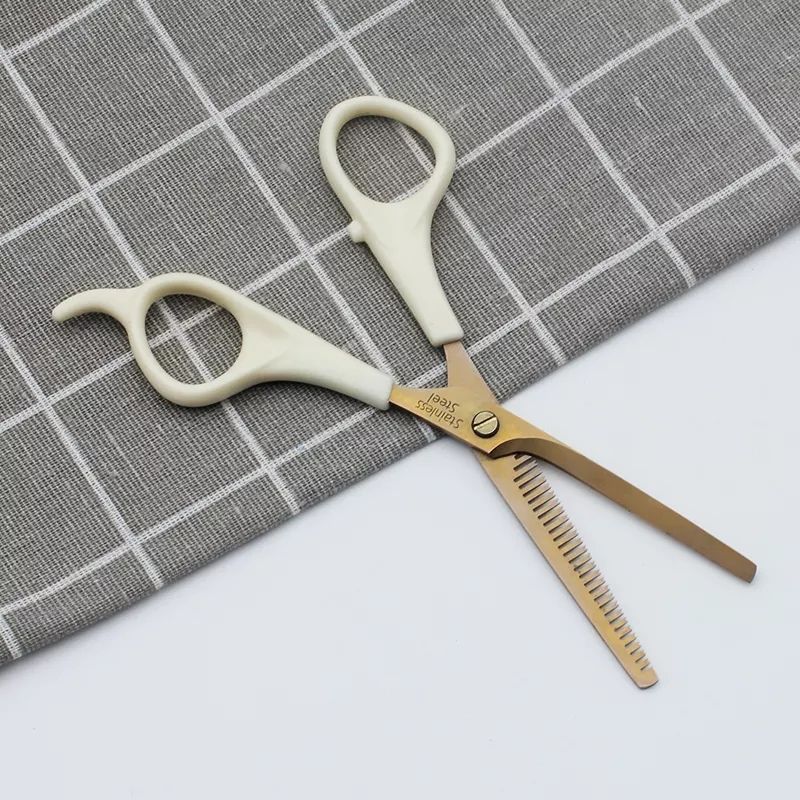
To go beyond brand stories, professionals and purchasing managers should assess manufacturers using a clear, technical checklist.
1. Steel Source And Heat Treatment
- Ask which steel grades are used and whether they come from reputable mills in Germany or Europe. [alibaba]
- Look for consistent hardness (HRC range) appropriate for scissors—too soft and the edge dulls fast, too hard and it may chip. [rudolf-med]
2. Edge Geometry And Grinding Technology
- Confirm if the manufacturer uses CNC grinding, precision lapping, and optical inspection to control edge angles. [rudolf-med]
- For micro‑serrated blades, check that the serration pattern is even and fine, preventing hair snagging.
3. Pivot System And Ergonomics
- Inspect pivot screws or tension systems for micro‑adjustability.
- Evaluate handle design: offset grips and ergonomic thumb rings reduce wrist strain in long shifts. [rudolf-med]
4. Quality System And Certifications
- For OEM or B2B buyers, ask about ISO-certified production, traceability, and batch-level inspection. [europages.co]
- Medical and surgical scissor manufacturers in Germany often demonstrate high process control that can be mirrored in professional hair tools. [linkedin]
5. After‑Sales Service And Sharpening Support
- A serious manufacturer either runs or partners with authorized sharpening centers and can advise on service intervals based on usage.
- Check whether spare parts (tension screws, finger rest, rings) are available for long-term maintenance.
This structured evaluation helps salons, barbershops, and brand owners compare not just labels, but real manufacturing competence.
Recent market analyses show that high-precision, professional cutting tools—including scissors—are enjoying steady growth, driven by both grooming and medical applications. [linkedin]
Key trends influencing German scissor manufacturers:
- Premiumization and professionalization – Demand for razor-edge and professional-grade scissors in Europe is forecast to grow with a CAGR in the mid‑single digits over the coming years. [indexbox]
- Medical and surgical scissors leadership – German companies in the surgical segment emphasize durability, precision, and ergonomic design, reinforcing Germany's overall reputation in scissor manufacturing. [linkedin]
- OEM expansion – Many brands opt not to own factories but instead rely on OEM partners that specialize in scissors and shears production, often in Asia, while maintaining German-inspired designs and specifications. [ydscissors]
For professional users, this means:
- More choice of designs and price tiers, from entry-level to luxury. [indexbox]
- A growing number of private-label brands that are produced by a limited number of serious OEM manufacturers worldwide. [ydscissors]
While classic German brands remain influential, many international companies today choose to partner with specialized OEM manufacturers to develop their own branded scissors lines. Kingford Homeware Co., Ltd. is one such professional OEM manufacturer.
Kingford Homeware Co., Ltd. is a professional scissors manufacturer integrating R&D, production, and sales, serving overseas brands, wholesalers, and manufacturers as an OEM partner. The company focuses on: [ydscissors]
- Kitchen scissors, household scissors, and multipurpose shears, and can extend to hair and professional use depending on client requirements. [ydscissors]
- Providing OEM services for global scissor brands and distributors who need stable, scalable supply. [ydscissors]
From a buyer's perspective (brand owner or wholesaler), Kingford can help you:
- Develop German‑style scissor designs based on beveled or semi‑convex edges with robust steel and ergonomic handles, tuned to your target market. [ydscissors]
- Customize specifications for blade length, handle offset, serration patterns, surface finish (satin, mirror, titanium coating), and packaging. [ydscissors]
- Scale from small pilot batches to large production runs, ensuring consistent quality across each batch. [ydscissors]
By combining German-inspired edge geometry and ergonomic concepts with flexible Asian manufacturing, brands can achieve competitive pricing while still meeting the expectations of barbers and hairdressers who prefer German‑style performance. [ydscissors]
To convert technical knowledge into real purchasing decisions, use this step‑by‑step checklist.
1. If you are predominantly a barber doing fades, tapers, and classic mens cuts, prioritize a beveled, micro‑serrated German-style scissor.
2. If you mix barbering with soft, layered salon work, consider two pairs: one German beveled, one Japanese convex.
3. For advanced, texture‑heavy work, ensure you have at least one high‑end convex pair in addition to your German workhorse shears.
- For barbers, longer blades (6.0\"–7.0\") often feel more natural for scissor‑over‑comb.
- For salon stylists, 5.0\"–5.75\" can be better for interior work and precision.
- Beveled + serrated: maximum control on dry or coarse hair; excellent for beginners and high‑volume barbers.
- Semi‑convex: good all‑rounder for mixed salon work.
Use the "Evaluate a manufacturer" checklist above to check:
- Steel source and hardness. [alibaba]
- Edge consistency and finish.
- Ergonomic design and pivot system. [rudolf-med]
- Quality certifications and OEM experience. [ydscissors]
Kingford, for example, can industrialize a German-style barber scissor line for your brand, balancing cutting performance, durability, and price. [ydscissors]
If you are a brand owner, wholesaler, or manufacturer seeking to launch or expand a German-style professional scissor range, working with a dedicated OEM partner is often more efficient than building your own factory from scratch. [ydscissors]
As a professional scissors manufacturer integrating R&D, production, and sales, Kingford Homeware Co., Ltd. can help you:
- Translate your target market needs (barbers, salons, home users) into concrete technical specifications. [ydscissors]
- Design German-style beveled or semi‑convex shears with appropriate materials, ergonomics, and finishing. [ydscissors]
- Provide stable OEM production and long‑term supply for your brand. [ydscissors]
Take the next step:
Reach out to Kingford's OEM team with your target segment, desired specifications, and volume expectations to co‑develop a high‑performance, German-style scissor line tailored to your brand.
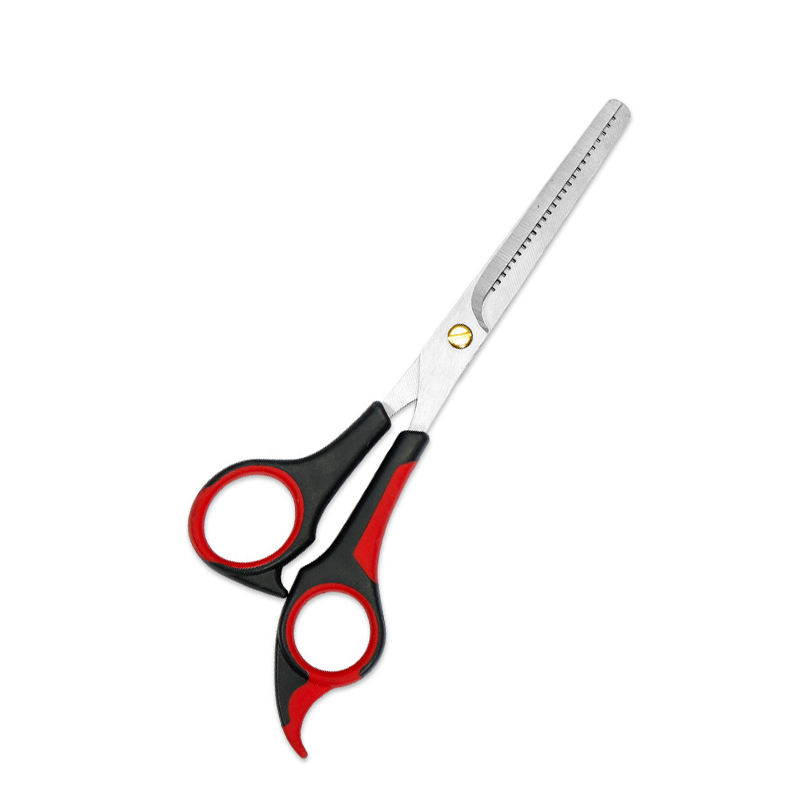
1. Are German scissors really better for barbers than Japanese scissors?
German scissors are generally harder, more robust, and often beveled or micro‑serrated, which makes them excellent for blunt cuts and scissor‑over‑comb in busy barbershops. Japanese scissors with convex edges excel at soft, sliding techniques but are less forgiving under heavy use. [europages.co]
2. Can I use German scissors for slice cutting and feathering?
In most cases, no. Beveled, serrated German blades tend to grip hair rather than let it slide, so slice cutting can cause pulling and discomfort. For slice and feathering work, a convex Japanese-style edge is a better choice.
3. What is the main difference between Jaguar and Glück?
Jaguar is a long‑established German brand with a wide range of professional models and a strong global reputation, often seen as a higher‑end choice. Glück is newer, lighter, and more affordable, targeting aspiring hairdressers and barbers with simple, user‑friendly designs.
4. Why do so many brands use OEM manufacturers instead of their own factories?
Running a scissor factory requires specialized machinery, steel sourcing, heat treatment, and QC expertise. Many brands prefer to work with OEM specialists like Kingford Homeware Co., Ltd., who already have integrated R&D and production, to reduce risk and speed time‑to‑market. [ydscissors]
5. How do I know if a German-style scissor meets professional standards?
Check for reputable steel, precise edge grinding, ergonomic design, and evidence of robust quality control such as ISO certifications or detailed QC procedures. When in doubt, request samples and test them under real salon or barbershop conditions over several weeks. [alibaba]
- IndexBox – Germany's scissors and tailor shears market report and trend data. [indexbox]
- Industry reports on Germany razor‑edge and professional scissor market growth. [linkedin]
- Market analyses of German surgical and conjunctival scissors, highlighting German precision and manufacturing capabilities. [linkedin]
- RUDOLF Medical – German surgical scissors product descriptions and quality claims. [rudolf-med]
- Europages – German scissors manufacturers and producers overview. [europages.co]
- Alibaba and related listings – examples of German stainless steel tool and combination scissor producers. [alibaba]
- Kingford Homeware Co., Ltd. – OEM scissors manufacturing and capability descriptions. [ydscissors]


