
English 


Views: 222 Author: Kingford Scissors Publish Time: 2026-04-28 Origin: Site


Kitchen scissors (often called kitchen shears) are more than a convenient gadget—they are a precision tool designed for cutting poultry, trimming herbs, portioning pizza, opening food packaging, and handling many tasks where knives are slower or less safe. As an OEM kitchen scissor manufacturer working with leading global brands, Kingford Homeware Co., Ltd. sees how well‑designed shears directly improve kitchen efficiency and food safety. [robertsiegers]
From here, we will walk through practical techniques, safety best practices, real‑world examples from chefs, and manufacturer‑level insights on materials and construction. [insight-kitchenknife]
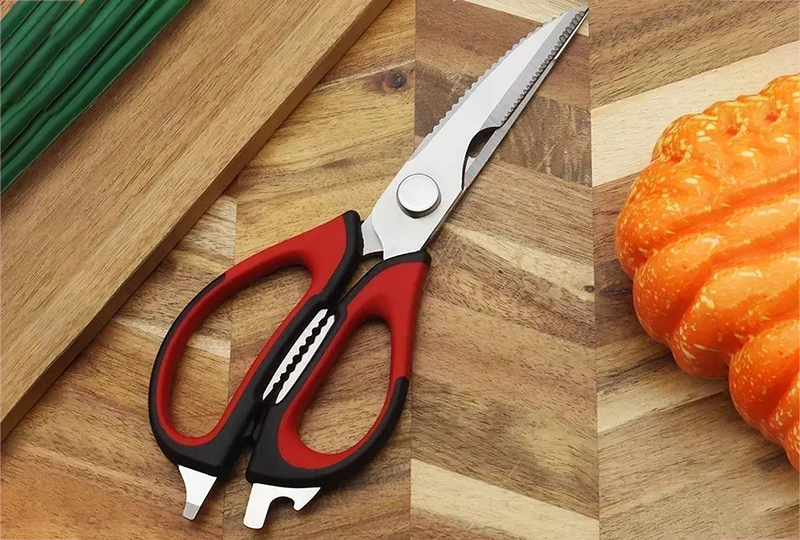
For both home cooks and food professionals, kitchen scissors offer three big advantages: speed, control, and safety. When paired with quality manufacturing and ergonomic design, they become a versatile tool that can replace several single‑purpose gadgets. [bigmarketing]
Key benefits of kitchen scissors:
- Faster than knives for many prep tasks (herbs, scallions, small vegetables). [andrewzimmern]
- Safer and more controlled when cutting slippery or irregular items, such as poultry skin or seafood shells. [3claveles]
- Easier for beginners to handle than large knives, reducing the risk of accidental cuts. [foodbloggerpro]
- More hygienic when designed for easy disassembly and thorough cleaning. [insight-kitchenknife]
Professional chefs often reach for shears when knives would be awkward, messy, or slow. Below are three high‑impact kitchen tasks where scissors really shine. [andrewzimmern]
Kitchen scissors are ideal for spatchcocking chicken, trimming wings, and removing excess fat. The blades give you firm control over skin and bone, which helps avoid slips and makes the process cleaner. [3claveles]
Step‑by‑step: Spatchcock a chicken with scissors
1. Pat the chicken dry with paper towels to reduce slipping. [3claveles]
2. Place it breast‑side down on a stable cutting board.
3. Use the scissors to cut along one side of the backbone, from tail to neck. [3claveles]
4. Repeat on the other side to remove the backbone entirely.
5. Flip the chicken, press down firmly on the breastbone to flatten it.
6. Trim away extra fat or loose skin for even roasting.
Many chefs prefer scissors here because controlled squeezing is less intimidating and more stable than pushing a heavy knife through bone. [3claveles]
Delicate herbs (basil, chives, cilantro) can bruise and turn dark when chopped with a dull knife. Sharp kitchen scissors let you cut them cleanly, directly over the pan or plate. [andrewzimmern]
Practical ways to use kitchen scissors for herbs:
- Stack and roll basil leaves like a "cigar," then snip thin strips (chiffonade) for garnish. [andrewzimmern]
- Cut chives and scallions directly into soups and omelets to control length and minimize mess. [andrewzimmern]
- Trim stems off parsley and cilantro while leaving leaves intact for better texture.
This method keeps flavors bright and presentation more refined—a detail both chefs and food‑service brands care about. [gushwork]
Many cooks find that a standard pizza cutter struggles with thick crusts or heavily topped pizzas. Good kitchen scissors make straight, clean cuts through crust, cheese, and toppings without dragging. [andrewzimmern]
Use scissors to:
- Cut pizza into neat wedges or squares directly on a wooden board.
- Portion quesadillas, flatbreads, and pita for platters.
- Divide kids' meals (pasta bakes, lasagna sheets) into bite‑sized pieces quickly.
Food‑service professionals often adopt this method because it's fast, repeatable, and reduces tearing that affects plating. [andrewzimmern]
Beyond the "big three" tasks above, high‑quality kitchen scissors can simplify dozens of everyday jobs. This matters not only for home users but also for restaurants and food manufacturers focused on efficiency. [3claveles]
Everyday uses for kitchen scissors:
- Opening tough food packaging, bags, and shrink wraps without damaging contents. [3claveles]
- Cutting bacon or cured meats into strips directly over a pan.
- Trimming fat and sinew from meat portions before cooking. [3claveles]
- Cutting seaweed sheets, dumpling wrappers, or noodles for portion control.
- Splitting lobster shells or crab legs with serrated blades.
- Snipping baking parchment or string when trussing roasts.
As an OEM manufacturer serving international brands, Kingford Homeware pays close attention to design, materials, and durability—because these directly impact user experience and long‑term value. Choosing the right shears starts with understanding core quality features. [robertsiegers]
The heart of any kitchen scissor is its blade. Food‑contact safety, sharpness retention, and corrosion resistance all depend on material choice. [gushwork]
Look for:
- High‑grade stainless steel (e.g., 420/430 or higher) for rust resistance and durability. [insight-kitchenknife]
- Precision‑ground edges that cut cleanly without crushing soft foods. [insight-kitchenknife]
- Micro‑serrated sections for gripping slippery items such as poultry skin or seafood shells. [3claveles]
High‑volume OEM producers typically stabilize quality by controlling steel composition, heat treatment, and edge geometry at scale. [bigmarketing]
Comfort matters, especially for chefs who perform hundreds of cuts a day. Well‑designed handles reduce fatigue and injury risk. [marketingaid]
Quality handle characteristics:
- Non‑slip materials such as reinforced plastic with soft‑touch or textured coating. [insight-kitchenknife]
- Ambidextrous design that works for both right‑ and left‑handed users.
- Enough room for fingers to fit without pressure points, even when wearing kitchen gloves. [insight-kitchenknife]
In user feedback, customers often highlight that comfortable handles are the difference between a tool they love and one they avoid. [marketingaid]
In modern kitchen environments—especially in food‑service or food‑processing—hygiene and safety are non‑negotiable. [gushwork]
Premium shears often include:
- Built‑in locking mechanisms for safe storage.
- Detachable blades that separate for thorough cleaning and sharpening. [3claveles]
- Smooth joints and minimal crevices to avoid trapping food residues. [3claveles]
These features support HACCP‑style hygiene practices and reduce the risk of cross‑contamination. [gushwork]
User experience with kitchen scissors improves dramatically when people apply a few pro‑level techniques. The tips below come from both chefs and tool engineers. [andrewzimmern]
Technique tips:
- Use the lower part of the blade near the pivot for harder items (bones, thick stems) to maximize leverage. [3claveles]
- Keep the cutting hand steady and move the food when possible for better control.
- For repetitive cuts (like herbs), adopt a rhythm of partial squeezes instead of fully closing the blades to speed up work.
- Avoid twisting the blades mid‑cut, which can misalign the pivot and reduce long‑term sharpness. [3claveles]
Even the best scissors perform poorly if not properly maintained. From a manufacturer's standpoint, many "defects" reported by end users are actually the result of poor cleaning or unnecessary abuse. [3claveles]
After each use, clean your scissors to prevent bacterial growth and rust. [3claveles]
Recommended routine:
1. Rinse off visible food debris under warm water immediately after use.
2. Wash with mild dish soap and hot water; use a soft brush around the pivot. [3claveles]
3. Rinse thoroughly, then dry completely with a clean towel.
4. Store in a dry place, ideally in a sheath, drawer organizer, or on a magnetic strip away from humidity.
Many food‑service clients mandate that all cutting tools be fully dried before storage to prevent corrosion and to meet hygiene audits. [gushwork]
Over time, even quality stainless‑steel blades will dull. Keeping them sharp is essential for clean cuts and safety. [3claveles]
- Check sharpness by cutting a sheet of paper; if the blades tear instead of slice, sharpening is due. [3claveles]
- Use a dedicated scissor sharpener or send them to a professional sharpening service when needed. [3claveles]
- Avoid cutting very hard non‑food items (wire, metal twist ties) that can chip the blades.
Manufacturers design blades with specific hardness levels to balance edge retention and toughness, so appropriate use directly extends tool life. [bigmarketing]
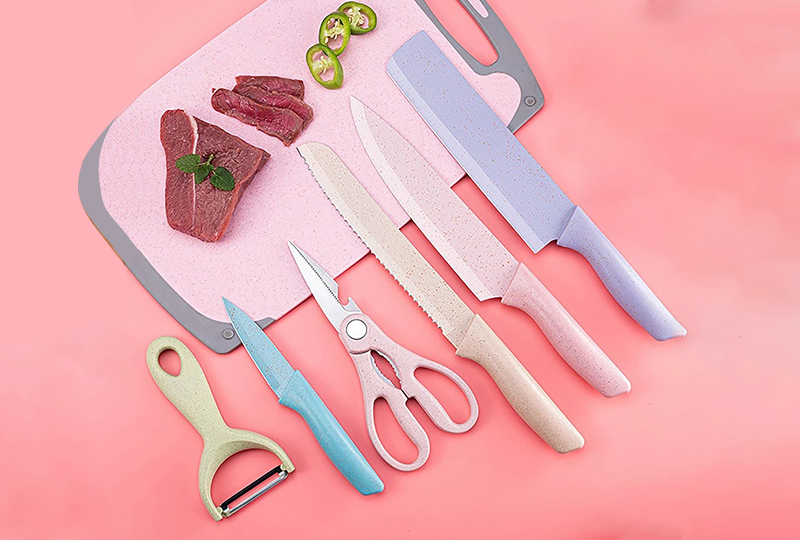
If you're a brand owner, wholesaler, or food producer, selecting the right OEM partner for kitchen scissors is as important as the product design itself. Kingford Homeware Co., Ltd. specializes in OEM kitchen scissors that align with international standards and branding requirements. [niceflatware]
OEM (Original Equipment Manufacturer) production allows you to specify materials, design, packaging, and brand identity while leveraging a factory's manufacturing expertise and infrastructure. [bonethome]
Advantages of OEM kitchen scissors:
- Custom blade styles and handle designs aligned with your market positioning.
- Consistent quality control across large volumes for retail or promotional campaigns. [robertsiegers]
- Flexible branding options (logo printing, laser engraving, custom packaging).
- Ability to create product families: kitchen scissors, poultry shears, multi‑purpose shears, and more.
For private‑label kitchenware brands, scissors are a natural add‑on to knives, cutting boards, and cookware collections. [niceflatware]
From an industry perspective, decision‑makers focus on performance, reliability, and compliance. [robertsiegers]
When evaluating OEM kitchen scissor suppliers, consider:
- Proven experience supplying international supermarket, cookware, or restaurant brands.
- Certification and compliance with target market standards (e.g., food‑contact regulations). [gushwork]
- Transparent material specifications and test reports for blades and handles. [insight-kitchenknife]
- Stable production capacity and lead times that match your seasonal sales cycles. [robertsiegers]
To simplify decision‑making for both consumers and B2B buyers, the table below summarizes key features and their typical benefits. [insight-kitchenknife]
| Key feature | What it means in use |
|---|---|
| Stainless‑steel blades | Better rust resistance and food safety for long‑term kitchen use. (3claveles) |
| Micro‑serrated edges | Improved grip on slippery foods like poultry skin and seafood shells. (3claveles) |
| Detachable blades | Easier deep cleaning and more hygienic operation in busy kitchens. (3claveles) |
| Ergonomic, non‑slip handles | More comfortable grip, especially for extended prep sessions. (insight-kitchenknife) |
| Safety lock | Safer storage in drawers or tool rolls, useful around children. (3claveles) |
| OEM customization | Tailored designs, colors, and branding for private‑label programs. (robertsiegers) |
From warranty feedback and end‑user reviews, several recurring mistakes significantly shorten tool lifespan or compromise safety. Knowing these ahead of time helps both brands (for education) and users (for practice). [marketingaid]
Avoid these habits:
- Using kitchen scissors as general household tools for wire, hard plastic, or DIY jobs.
- Leaving scissors to soak in water, which can cause rust at the pivot. [3claveles]
- Putting non‑dishwasher‑safe models in high‑heat cycles that damage handles.
- Storing them wet or in damp environments, especially near sinks.
- Allowing children to use adult‑sized shears unsupervised.
Clearly communicating these points on packaging, manuals, and product pages builds trust and reduces returns—a key part of E‑E‑A‑T in the kitchenware category. [foodbloggerpro]
Even with excellent maintenance, there comes a point when replacement is more efficient than repair. For brands and food‑service operators, proactively upgrading tools can reduce accidents and improve workflow. [insight-kitchenknife]
Signals it may be time to upgrade:
- Visible rust that does not fully remove with proper cleaning. [3claveles]
- Loosened pivot that no longer stays aligned even after adjustment.
- Chipped blades, especially near the tips or micro‑serrated sections.
- Handles that have cracked, warped, or become sticky over time.
For B2B buyers, planning a replacement cycle (for example, every 12–24 months depending on usage) helps maintain consistent cutting performance across teams. [bigmarketing]
Whether you're a home cook, a professional chef, or a buyer for a kitchenware brand, high‑quality, well‑designed kitchen scissors can transform how you prep food every day. [insight-kitchenknife]
If you are a brand owner, wholesaler, or manufacturer looking for reliable OEM kitchen scissors, partner with Kingford Homeware Co., Ltd. to develop scissors that match your market, your branding, and your performance standards. Reach out to discuss blade materials, handle designs, and private‑label options tailored to your customers. [niceflatware]

Q1: Are kitchen scissors really safer than knives for beginners?
Yes. For many tasks like trimming herbs, cutting pizza, or breaking down small poultry, scissors provide more stability and control than a large knife, which reduces the risk of slips and cuts. [andrewzimmern]
Q2: Can I put my kitchen scissors in the dishwasher?
It depends on the specific product design and materials. Many manufacturers recommend handwashing to protect the blades, pivot, and handle coatings, especially for professional‑grade stainless‑steel scissors. [insight-kitchenknife]
Q3: How often should kitchen scissors be sharpened?
Frequency depends on usage and the hardness of the steel, but regular home users may sharpen once or twice a year, while professional kitchens may need more frequent sharpening to keep performance consistent. [insight-kitchenknife]
Q4: What is the difference between kitchen shears and regular scissors?
Kitchen shears are purpose‑built for food preparation, typically made from food‑safe stainless steel, with stronger pivots, ergonomic handles, and often micro‑serrated blades for better grip on wet or slippery ingredients. [insight-kitchenknife]
Q5: Why should brands choose OEM kitchen scissors instead of generic ones?
OEM kitchen scissors allow brands to control design, materials, quality, and branding, creating a differentiated product line that better meets target customer needs and supports long‑term brand positioning. [niceflatware]
1. Robert Siegers – "SEO for Manufacturers: Strategies to Dominate Search in 2025."
<https://robertsiegers.com/en/seo-for-manufacturers> [robertsiegers]
2. Nice Flatware – "Why OEM Stainless Steel Flatware Suits Private-Label Brands."
<https://www.niceflatware.com/best-oem-flatware-for-private-label-brands/> [niceflatware]
3. 3 Claveles – "How to Get the Most Out of Your Kitchen Scissors?"
<https://www.3claveles.com/en/blog/how-to-get-the-most-out-of-your-kitchen-scissors-n388> [3claveles]
4. Insight Kitchen Knife – "What Are the Key Features of High-Quality Kitchen Shears?"
<https://www.insight-kitchenknife.com/zh-CN/what-are-the-key-features-of-high-quality-kitchen-shears.html> [insight-kitchenknife]
5. BigMarketing – "Manufacturing SEO: 10 Proven Strategies for Top Rankings."
<https://bigmarketing.com/manufacturing-seo/> [bigmarketing]
6. Marketing Aid – "Ultimate E-E-A-T Guide for 2024."
<https://www.marketingaid.io/ultimate-eeat-guide/> [marketingaid]
7. Andrew Zimmern – "11 Ways to Use Your Kitchen Shears."
<https://andrewzimmern.com/11-ways-to-use-your-kitchen-shears/> [andrewzimmern]
8. BONET Houseware – "OEM 厨房剪刀:探索品质和舒适度."
<https://www.bonethome.com/zh-Hans/blog/high-quality-oem-kitchen-scissors-from-yangjiang-producers> [bonethome]
9. Gushwork – "Food Manufacturer SEO Strategies to Increase Leads."
<https://www.gushwork.ai/blog/seo-for-food-manufacturing-companies> [gushwork]
10. Food Blogger Pro – "E-E-A-T for Food Blog SEO."
<https://www.foodbloggerpro.com/blog/e-e-a-t-for-food-blog-seo/> [foodbloggerpro]


