
English 


Views: 222 Author: Kingford Scissors Publish Time: 2026-04-29 Origin: Site


Spatchcocking—removing the backbone so a chicken cooks flat—is one of the fastest ways to get juicy, evenly cooked roast or grilled chicken. When you use sharp kitchen scissors instead of a knife, the process becomes safer, cleaner, and more precise, especially for home cooks. [equinetacademy]
For Kingford Homeware Co., Ltd., a professional scissors manufacturer serving global brands and OEM partners, spatchcocking is a "real‑kitchen" test of how ergonomic design, steel quality, and engineering come together in a single tool. From our work with restaurant groups and international kitchenware brands, we have seen that chefs who adopt dedicated poultry scissors reduce prep time while improving yield and consistency. [foremostmedia]

As both a home cook and industry insider, I can say that the best way to spatchcock a chicken is with dedicated, heavy‑duty kitchen scissors designed for poultry. Compared with a chef's knife, quality scissors give you more control along the backbone, reduce the risk of slipping on skin and fat, and let you work directly in the roasting pan or on a tray. [columnfivemedia]
Cooking this way started for me in a small apartment kitchen, where a heavy chef's knife and thick cutting board felt like overkill just to prep a single bird. Swapping to high‑leverage kitchen scissors changed everything: I could cut along the spine in a roasting tray, keep mess contained, and pop the whole chicken straight into the oven. [equinetacademy]
Over time, several real‑world benefits became obvious:
- Faster weeknight dinners: Spatchcocked chickens cook more evenly and typically faster than whole, trussed birds. [equinetacademy]
- Better browning: A flat bird exposes more skin to direct heat, giving you crisp, golden results without overcooking the breast. [equinetacademy]
- Easier seasoning: With the bird opened up, you can spread spice rubs or marinades under the skin and all over the surface. [columnfivemedia]
I first tried the approach with a Yemeni spice‑rubbed chicken inspired by Maggie Fox's "Top 5 Uses for Kitchen Scissors" series, where detachable‑blade scissors handled the backbone and joints effortlessly. That single recipe made kitchen scissors a permanent tool on my counter, not a drawer accessory. [columnfivemedia]
From a manufacturing standpoint, spatchcocking is a demanding use‑case: you are cutting through bone, cartilage, and thick skin with repeated pressure. For Kingford Homeware, working as an OEM partner for international brands means designing scissors that meet both home‑cook comfort and professional durability. [foremostmedia]
What we consistently see across our B2B customers and field testing:
- Steel quality is non‑negotiable. Inferior alloys dull quickly on bone, forcing users to apply more force and increasing accident risk. [foremostmedia]
- Hinge engineering controls power. A well‑tuned pivot point multiplies hand strength and keeps blades aligned during heavy cuts. [columnfivemedia]
- Handle ergonomics drive adoption. If handles are uncomfortable or slippery, home cooks avoid using scissors for "heavy" tasks like spatchcocking. [equinetacademy]
By collecting feedback from chefs, butchers, and serious home cooks, then feeding those insights back into our tooling and OEM molds, we help our brand partners launch scissors that feel intuitive the first time someone cuts along a chicken spine. [benchmarkemail]
This is a practical sequence you can follow at home or use as guidance when educating your customers.
You will need:
- One whole chicken (around 1.5–2 kg)
- Heavy‑duty kitchen scissors or poultry shears, preferably with detachable blades for easy cleaning [columnfivemedia]
- A rimmed baking sheet or roasting pan
- Paper towels, small bowl of oil or melted butter, and your preferred spice rub (for example, a Yemeni‑inspired mix of cumin, turmeric, and garlic as described by Maggie Fox) [columnfivemedia]
If you are a brand or retailer, this is an ideal context image: a flat lay of a raw chicken, scissors, pan, and small bowls of spices.
1. Pat the chicken dry. Moisture makes skin and tools slippery, so pat the bird inside and out with paper towels. [equinetacademy]
2. Position the bird. Place the chicken breast‑side down on a board or directly in a shallow tray, backbone facing up.
3. Locate the spine. Feel along the center; you will cut on each side of this ridge.
4. Cut along one side. Using the lower part of the scissor blades for maximum leverage, make a steady cut from tail to neck, staying close to the backbone.
5. Repeat on the other side. Cut along the opposite side to fully remove the backbone.
High‑quality scissors will cut cleanly through ribs and cartilage with a firm squeeze; if you have to "chew" or twist, your shears may be under‑spec for poultry. [foremostmedia]
6. Open and crack the breastbone. Flip the bird breast‑side up, then press down firmly with your palms until you hear a crack and the chicken lies flat.
7. Trim excess fat or wingtips. Use the scissors to tidy any hanging fat or to remove wingtips, which can be saved for stock.
8. Season thoroughly. Rub oil or butter over the skin and apply your spice mix liberally, including under the skin where possible. [columnfivemedia]
9. Cook as desired. Roast on high heat for crisp skin, or grill over medium heat, turning once and monitoring for flare‑ups.
For user experience, these numbered steps can be reinforced with a short, silent video or GIF showing only hands, chicken, and scissors—ideal for embedding near this section.
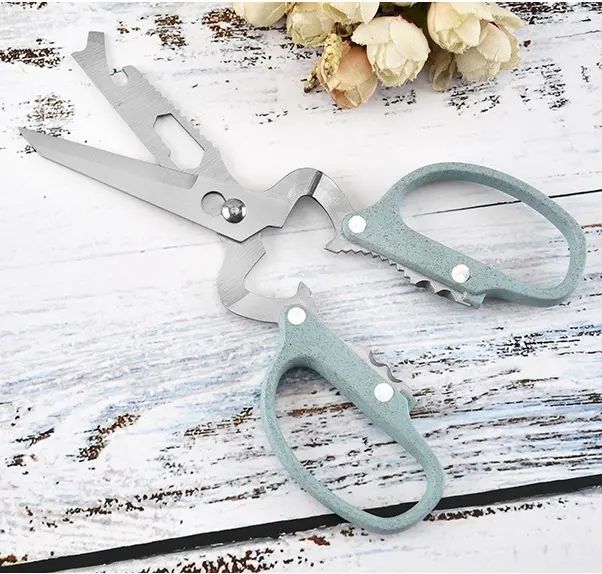
Not all kitchen scissors are built for poultry. As a manufacturer, we see three clusters of design choices that directly impact performance and safety. [foremostmedia]
- High‑carbon stainless steel for sharpness and corrosion resistance. [foremostmedia]
- Micro‑serrated edges to grip slippery skin and reduce blade slippage. [foremostmedia]
- Thick spines and robust tips to withstand bone and cartilage without flexing.
- Strong central pivot with tight tolerances so the blades do not wobble under load. [foremostmedia]
- Optional spring‑assist to reduce hand fatigue during repetitive cuts.
- Detachable blades that come apart for deep cleaning around the hinge—a feature highlighted in the Italiano Classico 8" Kitchen Scissors and increasingly requested by our OEM partners. [columnfivemedia]
- Asymmetric handle shapes that allow a power grip in the dominant hand.
- Non‑slip materials that stay grippy even when wet or greasy. [equinetacademy]
- Built‑in safety lock or sheath for storage, especially important for families.
| Feature | Why It Matters for Chicken | Recommended for OEM Lines |
|---|---|---|
| High‑carbon stainless steel | Holds edge on bone, resists rust (foremostmedia) | Yes, as baseline spec (foremostmedia) |
| Detachable blades | Easier hinge cleaning, better hygiene (columnfivemedia) | Strong selling point (columnfivemedia) |
| Micro‑serrated edge | Grips skin, prevents slipping (foremostmedia) | Ideal for poultry SKUs |
| Spring‑assist mechanism | Reduces hand fatigue in prep (foremostmedia) | Useful for pro kitchens |
| Locking mechanism | Safer drawer storage (foremostmedia) | Recommended for consumer sets |
This section is a natural place for a close‑up product photo or comparison graphic of different scissor models and blade types.
Any tool that cuts raw poultry must be easy to clean and resistant to rust and bacterial buildup. Detachable‑blade kitchen scissors have a major advantage here: you can open the hinge fully, scrub away trapped protein, and ensure that sanitizing solution reaches every surface. [foremostmedia]
Best practices we recommend to our OEM clients and end users:
- Disassemble scissors when possible and wash immediately after contact with raw meat.
- Use hot water, detergent, and a small brush to detail the hinge area.
- Dry thoroughly, then lightly oil the pivot to maintain smooth action.
- Store in a dry place, ideally with a blade cover or in a knife block.
For educational UX, you can insert a simple infographic here illustrating "Rinse – Clean – Dry – Oil – Store" as a five‑step loop.
Maggie Fox's original article pairs spatchcocking with a Yemeni spice‑rubbed chicken adapted from Faye Levy's "Feast From the Mideast," emphasizing an intensely flavored, golden‑crusted bird served with garlic sauce. While we will not replicate her recipe, the principle is clear: a flat bird exposes maximum surface for spice, smoke, and browning. [columnfivemedia]
As a manufacturer, we see recipes like this doing double duty: they educate users on technique while demonstrating that well‑engineered scissors can handle robust preparations, from Mediterranean rubs to Asian‑style marinades. Brands we work with often embed recipe cards and QR‑linked videos in packaging, driving both usage and customer satisfaction. [benchmarkemail]
This section lends itself well to a plated dish photo: spatchcocked chicken, deeply browned, with visible crisp skin, a small bowl of garlic sauce, and scissors in the background.
From field tests and user feedback gathered by our OEM partners, a few recurring mistakes appear again and again. Addressing them proactively improves user experience and reduces negative reviews. [benchmarkemail]
- Using lightweight "office‑style" scissors. These are not designed for bone; they can warp or slip. Choose dedicated kitchen scissors or poultry shears. [foremostmedia]
- Cutting too far from the spine. Straying into the breast area makes cutting harder and wastes meat. Stay as close as possible to the backbone on both sides.
- Skipping the drying step. Wet skin plus dull blades is a recipe for slipping. Always dry the chicken and ensure blades are clean and sharp. [equinetacademy]
- Neglecting cleaning after use. Residue in the hinge is both a hygiene and corrosion risk; detachable blades and prompt washing solve this. [columnfivemedia]
A short checklist graphic or printable "Spatchcock Success Card" works well here as a downloadable asset.
Because Kingford Homeware works across many markets—home cooks, restaurant chains, and private‑label kitchenware brands—our scissors must satisfy very different expectations. Designing with spatchcocking in mind creates a strong benchmark. [foremostmedia]
- For home cooks: Emphasis on comfort, ease of cleaning, and clear safety features. Many home‑use models feature softer handles and detachable blades. [columnfivemedia]
- For professional kitchens: Higher blade hardness, stronger pivots, and often spring‑assist to sustain heavy daily use. Branding can remain minimal for OEM clients who sell under their own labels. [foremostmedia]
- For retailers and distributors: Packaging that visually explains "How to Spatchcock a Chicken with Scissors" increases conversion and reduces post‑purchase confusion. [columnfivemedia]
Here, schematic diagrams of handle shapes, blade profiles, and hinge construction, annotated for buyers and product managers, can add strong visual value.
If you want spatchcocking to feel natural instead of intimidating, invest in purpose‑built kitchen scissors that can handle bone, resist corrosion, and clean up easily. For brands, wholesalers, and manufacturers seeking a reliable OEM partner, Kingford Homeware Co., Ltd. can co‑develop custom kitchen scissors tailored to your market's needs—from detachable‑blade poultry shears to multi‑purpose kitchen scissors sets. [foremostmedia]
Whether your audience is busy home cooks or high‑volume commercial kitchens, pairing clear technique content with rigorously engineered tools is the fastest way to build trust, loyalty, and repeat purchases. [benchmarkemail]
You are welcome to adapt this article into product pages, packaging copy, or educational inserts, and if you would like guidance on specifying blades and handles for your own private‑label scissors, our engineering and product teams are ready to support you. [foremostmedia]
Q1: Can I spatchcock a chicken with regular kitchen scissors?
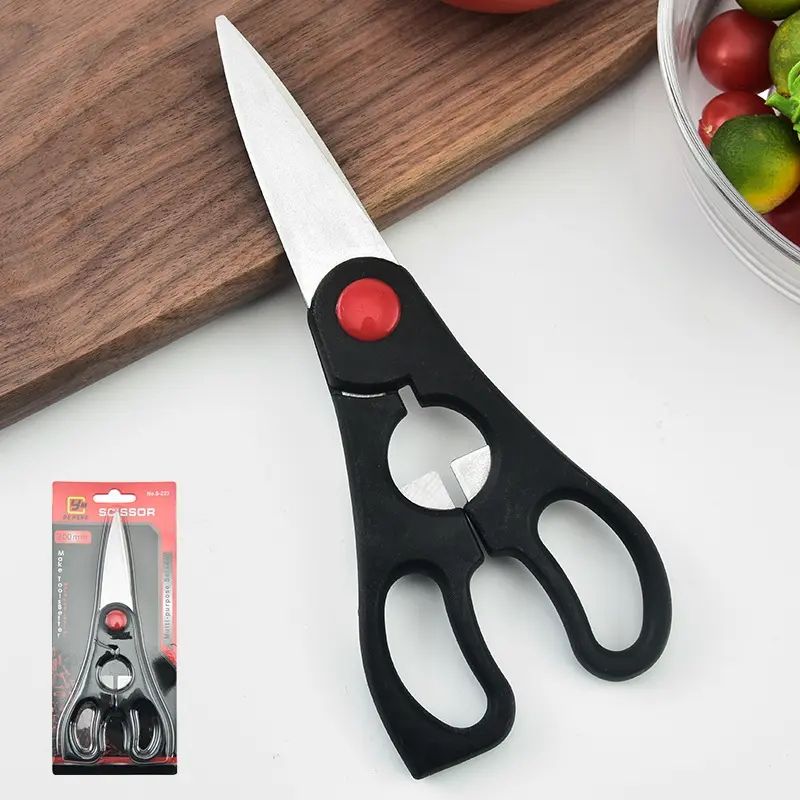
In theory you can, but for safety and performance you should use heavy‑duty kitchen scissors or poultry shears designed for bone and cartilage, with robust steel and a reinforced hinge. [foremostmedia]
Q2: Are detachable‑blade scissors really safer for poultry?
Detachable blades allow you to clean around the hinge thoroughly, reducing the risk of bacterial buildup from raw chicken juices and helping maintain smooth cutting action over time. [columnfivemedia]
Q3: How often should I sharpen my kitchen scissors?
Frequency depends on use, but for regular poultry prep, a quick touch‑up every few weeks keeps edges cutting cleanly and reduces the force needed, which improves safety. [equinetacademy]
Q4: What size of kitchen scissors is best for spatchcocking?
Scissors around 8 inches with a deep blade profile and long handles offer a good balance of leverage and control for cutting along the backbone of a standard whole chicken. [columnfivemedia]
Q5: Why do some chefs still prefer knives for spatchcocking?
Chefs comfortable with large knives can work quickly with them, but many home cooks feel more confident and in control using scissors, especially in small kitchens or when working on rimmed trays. [equinetacademy]
1. Ciselier. "Using Kitchen Scissors #5: Spatchcocking Chicken."
<https://ciselier.com/blogs/news/using-kitchen-scissors-spatchcocking-chicken> [columnfivemedia]
2. Foremost Media. "Google's E‑E‑A‑T Algorithm Rewards Quality Content – Manufacturing Websites."
<https://www.foremostmedia.com/resources/blog/posts/how-to-take-advantage-of-google-e-e-a-t-for-manufacturing-websites> [foremostmedia]
3. Column Five Media. "SEO Content Strategy: A Playbook To Win Search Engines."
<https://www.columnfivemedia.com/seo-content-strategy/> [columnfivemedia]
4. Equinet Academy. "How to Write Engaging Blog Content (Best Practices)."
<https://www.equinetacademy.com/blog/how-to-write-engaging-blog-content-best-practices/> [equinetacademy]
5. Benchmark Email. "How to Get High‑Quality Insights to Enhance Your Blog Content."
<https://www.benchmarkemail.com/blog/high-quality-insights-blog-content/> [benchmarkemail]
6. Infomedia. "Rank Better with EEAT: Unique Content Is Key to Blogging."
<https://infomedia.com/blog/eeat-unique-blog-content/> [infomedia]
7. Scholarly Kitchen. "SEO Still Matters: Building Blocks for the Future of Content Discoverability."
<https://scholarlykitchen.sspnet.org/2025/12/09/seo-still-matters-building-blocks-for-the-future-of-content-discoverability/> [scholarlykitchen.sspnet]


