
English 


Views: 222 Author: Kingford Scissors Publish Time: 2026-04-27 Origin: Site


As a professional scissor manufacturer working with chefs, home cooks, and OEM brands worldwide, we see every day how the *right* kitchen scissors turn messy fish prep into a fast, clean, and safe process. This guide combines hands‑on insights from our factory partners, current kitchen trends, and real user practices to show you exactly how to choose and use kitchen scissors for cutting fish—while quietly upgrading your entire kitchen workflow. [tastingtable]

- Why kitchen scissors are so effective for cutting fish
- How micro‑serrated blades work (and when knives are still better)
- Step‑by‑step: cutting fillets, trimming fins, and portioning
- A chef‑inspired steamed fish recipe using scissors
- How to choose the best kitchen scissors for fish
- Maintenance, hygiene, and safety tips from a manufacturer
- When to upgrade to professional‑grade, OEM‑level scissors
For many home cooks, fish is one of the most intimidating proteins to prep. Slippery skin, delicate flesh, and small bones can quickly turn into a frustrating experience, especially when knives aren't perfectly sharp. Quality kitchen scissors solve two key problems: control and stability. [tastingtable]
- Better grip on slippery skin thanks to micro‑serrated blades that "hold" the fish instead of letting it slide. [tastingtable]
- More natural hand motion for many users who feel safer squeezing handles than pushing a long knife through delicate flesh. [tastingtable]
- Less mess on the cutting board because you can cut directly over a tray, parchment, or even into a pot (for soups or stews). [andrewzimmern]
From a manufacturer's standpoint, we've seen demand for multi‑purpose kitchen scissors increase, especially in export markets where small kitchens, limited counter space, and busy lifestyles make compact tools more appealing than large knife sets. [ydscissors]
The original Ciselier article highlights a simple but powerful technical reason scissors excel at fish: micro‑serration on the lower blade. This is not just marketing language—it is a real manufacturing detail that changes how the blade behaves on slippery surfaces.
- Tiny grooves are machined or ground into one blade (usually the lower one).
- These micro‑teeth grip the fish skin or flesh, preventing sideways slip.
- The upper blade then slices cleanly through, producing a controlled, straight cut. [tastingtable]
Compared with a standard smooth knife blade:
- A knife depends almost entirely on sharpness and user technique. Once the edge dulls, it begins to slide and "chase" the fish around the board. [tastingtable]
- Micro‑serration provides a mechanical advantage, maintaining grip even when the edge is not razor‑new.
As a factory, we adjust serration patterns based on use cases: finer serrations for delicate fish skin, slightly coarser serrations for poultry bones or crustacean shells. [dalstrong]
Even as a scissors manufacturer, we recognize that knives remain essential for some fish tasks. Industry experts generally agree: [tastingtable]
- Use scissors for:
- Trimming fins and tails
- Cutting nori, herbs, aromatics, and garnishes
- Cutting fish into bite‑sized pieces for stews, soups, or curries
- Snipping open vacuum‑packed seafood or cutting banana leaves and parchment [andrewzimmern]
- Use knives for:
- Precise filleting and skin‑removal
- Removing pin bones
- Breaking down very large fish (tuna, large salmon) where long-blade control matters [tastingtable]
Professional chef interviews consistently emphasize that knives are more precise and versatile for detailed butchery, while scissors shine in high‑frequency, small cutting tasks where speed and safety matter more than perfect geometry. [dalstrong]
This section is designed for real‑world use: short steps, clear actions, and a minimal learning curve.
1. Choose the right scissors
- Use dedicated kitchen scissors with food‑grade stainless steel and micro‑serrated blades. [insight-kitchenknife]
- Avoid using the same pair for cardboard, plastic, or general household tasks; this dulls the edge and increases contamination risk. [dalstrong]
2. Prepare your station
- Line a tray with parchment, banana leaves, or a silicone mat for easy cleanup.
- Keep a small bowl of warm, lightly salted water nearby to quickly rinse off fish oils and scales from the blades.
3. Safety first
- Keep fingers away from the cutting line, especially when trimming fins or between bones.
- If your scissors are take‑apart, make sure they are fully locked together before use. [dalstrong]
This is where scissors are often better than knives, especially for beginners.
- Hold the fish firmly by the body or use a non‑slip mat.
- Use the tip of the scissors to snip along the base of the dorsal and side fins.
- Trim the tail by cutting straight across; micro‑serrations help bite through tough cartilage. [tastingtable]
- For smaller whole fish (like sardines or mackerel), you can also trim sharp spines for safer eating.
Pro tip from the factory floor: We design handles with longer leverage for models meant to cut through tougher joints; this reduces hand fatigue and improves control for repetitive trimming in professional kitchens. [foodandwine]
Portioning is where home cooks see the biggest day‑to‑day benefit.
1. Place the fillet skin‑side down on the lined tray.
2. Visualize or mark equal portions (for example, 4 portions from a 2‑lb fillet).
3. Cut straight down using the full length of the blade, keeping the lower serrated edge against the skin.
4. If the skin is very tough, cut from the flesh side first, then finish the skin with short, firm snips. [tastingtable]
Because the fish doesn't slide, you get more consistent portion sizes—important both for presentation and for even cooking times.
The original article shares an excellent example: an easy steamed fish in banana leaves, where scissors handle almost every prep step.
You can use scissors to:
- Snip green onions directly into a bowl.
- Trim and cut chilis into small pieces (removing seeds first for less heat).
- Cut banana leaves into large sheets to wrap the fish.
This not only saves time but also limits the number of cutting boards and knives that need washing.
Based on the original recipe and our own testing:
- Cut two sheets of banana leaves using your best kitchen scissors, each large enough to fully wrap the fish.
- Place one sheet on the work surface, and the second sheet crosswise on top to form a plus sign.
- Set the seasoned fish in the center, then fold the leaves over to create a sealed parcel.
- Use scissors to trim off any excess leaf or twine ends after tying, ensuring the parcel fits neatly in your steamer or oven dish.
You can steam‑bake at around 350°F for 10–20 minutes, depending on thickness, until the fish is just cooked through. Banana leaves act as a natural, low‑waste wrapper with a smaller environmental footprint than foil, and they're easy to find in the freezer section of most Asian grocery stores.
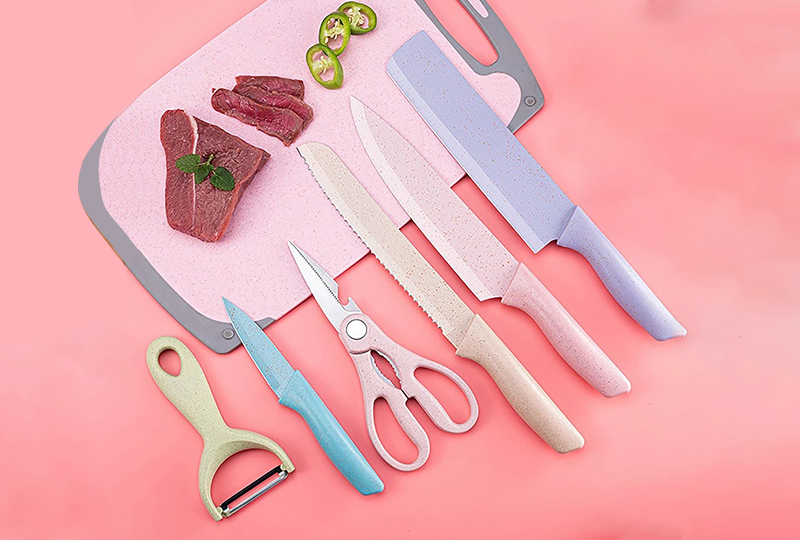
As an OEM kitchen scissors manufacturer, we see what works in professional kitchens and what fails in heavy‑duty use. Here are the key features that matter specifically for fish: [ydscissors]
| Feature | What to Look For | Why It Matters for Fish |
|---|---|---|
| Blade material | High‑carbon stainless steel, corrosion‑resistant | Resists rust from salt, easy to sanitize (dalstrong) |
| Serration pattern | Fine micro‑serration on at least one blade | Grips slippery skin and scales (tastingtable) |
| Blade length | Around 3–4 inches for control | Long enough for fillets, short enough for precision (dalstrong) |
| Handle design | Ergonomic, non‑slip, with enough room for larger hands | Safe when hands are wet or oily (foodandwine) |
| Take‑apart mechanism | Blades separate easily for cleaning | Prevents bacteria buildup at the pivot (dalstrong) |
| Spring or no spring | Optional spring assist for heavy tasks; solid pivot for finer control | Choose based on your main use case |
| Multi‑tool features | Bottle opener, nutcracker, scale scraper (optional) | Useful for small kitchens and multi‑purpose use (insight-kitchenknife) |
Mid‑ to high‑end kitchen shears tested by independent reviewers emphasize comfort, sharpness, and the ability to come apart for cleaning, especially when they're used for raw meat and fish. [reddit]
Fish carries strong odors and oils, so cleanability is a critical factor—both for user experience and food safety.
- Disassemble if possible. Take‑apart scissors let water and detergent reach the pivot area, where residue often hides. [dalstrong]
- Wash in warm, soapy water immediately after use; avoid long soaking, which can loosen handle materials over time.
- Dry thoroughly with a towel, then air‑dry completely before storage.
Some users prefer to keep a *fish‑only* pair of scissors to prevent flavor transfer to other ingredients. From a manufacturing viewpoint, we recommend clear color‑coding or subtle laser marking for such dedicated tools. [ydscissors]
Proper sharpening greatly extends the life of quality kitchen scissors.
- For straight sections of the blade, use a sharpening stone at roughly a 15–20‑degree angle, running the edge smoothly along the stone. [dalstrong]
- For serrated sections, use a serrated knife sharpener or specialized rod, matching the angle of the serrations. [dalstrong]
- Avoid low‑quality electric sharpeners not designed for scissors; they can strip away too much metal and ruin the serration pattern.
In busy OEM projects, we often design scissors to maintain usable sharpness through hundreds of cutting cycles in home settings before requiring professional sharpening, assuming normal cleaning and correct usage. [ydscissors]
Kingford Homeware Co., Ltd. is based in Yangjiang, China—an established hub for knives and scissors manufacturing—and provides OEM and ODM kitchen scissors for international brands, wholesalers, and retailers. Our experience across export markets reveals several trends relevant to both end users and business buyers: [ydscissors]
- Growing preference for multi‑piece kitchen scissors sets (for meat, seafood, herbs, and general use). [ydscissors]
- Increased demand for ergonomic, soft‑touch handles to reduce fatigue, especially in professional or semi‑professional kitchens. [foodandwine]
- Higher expectations for certified materials and traceable quality control in food‑contact products. [ydscissors]
For brands and distributors, partnering with an OEM manufacturer specialized in scissors allows for:
- Custom blade geometry optimized for fish, poultry, or all‑purpose use.
- Handle designs tailored to regional grip preferences and hand sizes.
- Private‑label packaging and branding that align with your market positioning. [ydscissors]
Even if you already own a pair of kitchen scissors, there are clear signs that it's time to upgrade, especially if you prepare fish regularly.
Consider replacing your scissors if:
- They struggle to cut through fish skin or small bones, even after cleaning.
- The pivot feels loose or wobbly, causing the blades to twist and crush rather than slice.
- You notice rust spots, especially along the cutting edge or pivot area.
- The handles are uncomfortable—slippery, too small, or causing strain during repetitive cutting. [foodandwine]
Modern, well‑designed kitchen scissors with micro‑serrated blades, ergonomic handles, and take‑apart construction can immediately improve your experience with fish prep and general cooking. [ydscissors]
If you often avoid cooking fish because prep feels messy or unsafe, upgrading to high‑quality, micro‑serrated kitchen scissors is one of the simplest changes you can make. For home cooks, look for a dedicated pair designed for seafood and general protein prep; for brands and wholesalers, consider developing a fish‑optimized kitchen scissors SKU with an OEM partner that understands both blade engineering and real‑world kitchen workflows. [ydscissors]
Whether you are a home chef or a buyer building your next kitchenware line, now is the perfect time to rethink how you cut fish—and let the scissors do more of the work.
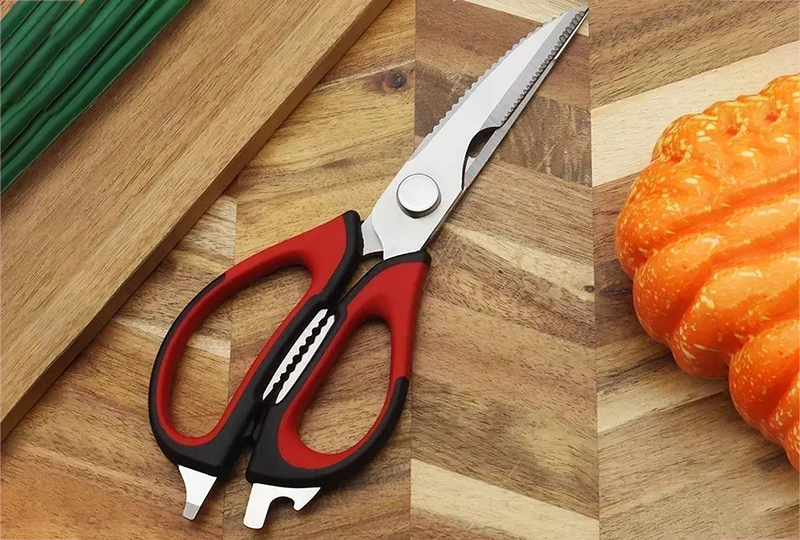
Q1: Are kitchen scissors safe to use on raw fish?
Yes. As long as they are made from food‑grade stainless steel and cleaned properly after each use, kitchen scissors are safe for raw fish. Dedicated scissors for raw proteins are recommended to avoid cross‑contamination. [insight-kitchenknife]
Q2: Can kitchen scissors replace a fillet knife completely?
No. Scissors are excellent for trimming fins, portioning fillets, and cutting ingredients around fish, but knives still provide better precision for filleting, deboning, and skin removal on large fish. [tastingtable]
Q3: Do I really need micro‑serrated blades for cutting fish?
For occasional use, smooth blades can work, but micro‑serrated blades significantly improve grip and control on slippery skin and scales, making the process easier and safer, especially for beginners. [tastingtable]
Q4: Are take‑apart kitchen scissors worth the extra cost?
Yes—particularly for fish and meat. Take‑apart designs make it much easier to remove trapped fat, proteins, and moisture from the pivot area, improving hygiene and blade longevity. [dalstrong]
Q5: How often should I sharpen kitchen scissors used for fish?
For typical home cooking, sharpening every 6–12 months is usually sufficient, depending on frequency of use and whether the scissors are ever used on packaging or non‑food materials. Visible dullness, slipping cuts, or mashed fish are clear signs it's time to sharpen. [reddit]
1. Ciselier Company – "Using Kitchen Scissors #2: Cutting Fish" (original inspiration and recipe).
<https://ciselier.com/blogs/news/using-kitchen-scissors-2-cutting-fish>
2. Tasting Table – "What Kitchen Shears Can (And Can't) Do When Cutting Fish".
<https://www.tastingtable.com/2081640/kitchen-shears-cutting-fish-when-use/> [tastingtable]
3. Andrew Zimmern – "11 Ways to Use Your Kitchen Shears".
<https://andrewzimmern.com/11-ways-to-use-your-kitchen-shears/> [andrewzimmern]
4. Dalstrong – "The Ultimate Guide to Kitchen Shears".
<https://dalstrong.com/blogs/news/the-ultimate-guide-to-kitchen-shears> [dalstrong]
5. Food & Wine – "The 5 Best Kitchen Shears, According to My Tests".
<https://www.foodandwine.com/best-kitchen-shears-7096434> [foodandwine]
6. Insight Kitchen Knife – "What is the Difference Between Kitchen Shears and Kitchen Scissors?".
<https://www.insight-kitchenknife.com/zh-CN/what-is-the-difference-between-kitchen-shears-and-kitchen-scissors.html> [insight-kitchenknife]
7. Kingford Homeware Co., Ltd. – Official site and product pages.
<https://www.ydscissors.com> [ydscissors]
<https://www.ydscissors.com/3-pack-kitchen-scissors-set.html> [ydscissors]
8. Ciselier Company – "How to Use Kitchen Scissors: Prepping Fish".
<https://ciselier.com/blogs/news/how-to-use-kitchen-scissors-prepping-fish> [ciselier]


