
English 


Views: 222 Author: Kingford Scissors Publish Time: 2026-05-04 Origin: Site


Ask any professional tailor, quilter, or seamstress about their biggest pet peeve, and you'll likely hear the same answer: someone using their fabric scissors to cut paper. This isn't just superstition or an overreaction—there's genuine science behind why paper damages high-quality fabric shears, and understanding this can save you hundreds of dollars in replacement costs. [so-sew-easy]
As a professional scissor manufacturer serving wholesale and OEM clients globally, we've witnessed countless cases where improperly maintained fabric scissors lost their precision cutting ability far earlier than expected.

Paper contains abrasive mineral compounds that accelerate blade dulling at an alarming rate. According to scissor industry experts at Kai Scissors, materials like kaolin clay, calcium carbonate, titanium oxide, and talc are added during paper manufacturing to increase stiffness and opacity. These minerals create a microscopic grinding action against the steel blade edge with every cut. [so-sew-easy]
The chemical composition of standard copy paper includes:
- Calcium carbonate (up to 25% by weight) for brightness and opacity
- Kaolin clay particles for smoothness and printability
- Titanium dioxide for whitening
- Talc for improved ink adhesion
Each of these compounds registers between 3-7 on the Mohs hardness scale, making them abrasive enough to remove microscopic steel particles from blade edges. [proshearus]
Fabric scissors feature ultra-sharp blade angles specifically engineered for clean fabric cutting without fraying or tearing delicate fibers. Professional-grade fabric shears typically have blade angles between 15-25 degrees, compared to 30-40 degrees for general-purpose scissors. This sharper geometry, while perfect for fabric, makes the cutting edge more susceptible to damage from abrasive materials. [threadsmonthly]
The precision hot-forging and hand-grinding processes used to create quality fabric scissors produce extraordinarily thin, sharp edges that can slice through silk charmeuse or georgette without snagging. However, this same precision makes them vulnerable to the mineral particles found in paper products. [so-sew-easy]
Kimi Jackson, Vice President of Development at the Association of Sewing and Design Professionals, confirms that while casual sewers using budget shears from mass retailers might not notice immediate degradation, professionals with high-end Wiss or Gingher shears observe measurable differences. "It's really a matter of respect for professional tools," Jackson explains, noting that even brief paper cutting requires earlier professional sharpening. [usatoday]
Many crafters wonder whether a single accidental paper cut will destroy their fabric scissors. Research from sewing professionals indicates that occasional accidental contact won't cause catastrophic damage. The degradation is cumulative—repeated paper cutting accelerates dulling significantly compared to fabric-only use. [reddit]
However, the immediate effect is noticeable: paper fibers create a residue film on the blade surface that must be wiped away promptly. Without cleaning, this buildup causes the scissors to feel rough and sticky during opening and closing motions, reducing cutting precision. [threadsmonthly]
According to scissor maintenance specialists, fabric scissors used exclusively on textiles may require professional sharpening every 12-18 months with regular use. The same scissors used occasionally on paper may need sharpening every 4-6 months, representing a 200-300% increase in maintenance frequency. [threadbarecreations.blogspot]
Modern tissue paper and thin pattern paper pose less risk than cardstock or cardboard. Historical paper manufacturing included chalk-based whitening agents that caused extreme dulling, but contemporary papers use different additives. Still, even tissue paper contributes to gradual blade wear, though some professionals consider this acceptable when the paper aids accurate silk cutting. [blogforbettersewing]
Paper types ranked by blade damage potential:
1. Corrugated cardboard (highest risk)
2. Thick cardstock and poster board
3. Standard copy/printer paper
4. Glossy magazine paper
5. Tissue and pattern paper (lowest risk among paper products)
Interestingly, certain fabrics can dull scissors faster than some paper types. Heavy denim, raw silk with slubbed fibers, and polar fleece with synthetic content all cause measurable blade wear. The key difference is that fabric scissors are designed and tempered specifically to handle these materials, whereas paper's mineral content creates an entirely different type of abrasive action. [blogforbettersewing]
Professional scissor maintenance requires minimal time but delivers maximum blade longevity: [scissorpedia]
After each use:
- Wipe blades with a soft, dry cloth to remove all residue
- For stubborn buildup, use a cloth dampened with isopropyl alcohol (never soak the scissors)
- Ensure complete dryness before storage to prevent corrosion
- Apply one drop of specialized scissor oil at the pivot point
- Open and close blades 10-15 times to distribute oil, then wipe excess
Dedicate five minutes weekly to blade health assessment: [scissorpedia]
- Edge inspection: Hold closed blades against a backlight source. Any light escaping between the blades indicates alignment issues or edge damage.
- Screw tension: Check that the pivot screw maintains proper tension. Too loose causes imprecise cuts; too tight creates excessive friction.
- Alignment verification: Confirm blade tips meet perfectly when closed. If dropped or mishandled, seek professional service immediately.
Budget for professional sharpening twice annually for casual use, or quarterly for daily professional applications. Never attempt DIY sharpening on quality fabric scissors—the precision flat-hone equipment and expertise required to maintain proper blade geometry cannot be replicated with home sharpening tools. [salonshearsdirect]
Professional sharpening services typically cost $15-35 per pair but restore blades to factory specifications, whereas improper sharpening can permanently damage the cutting edge geometry. [salonshearsdirect]
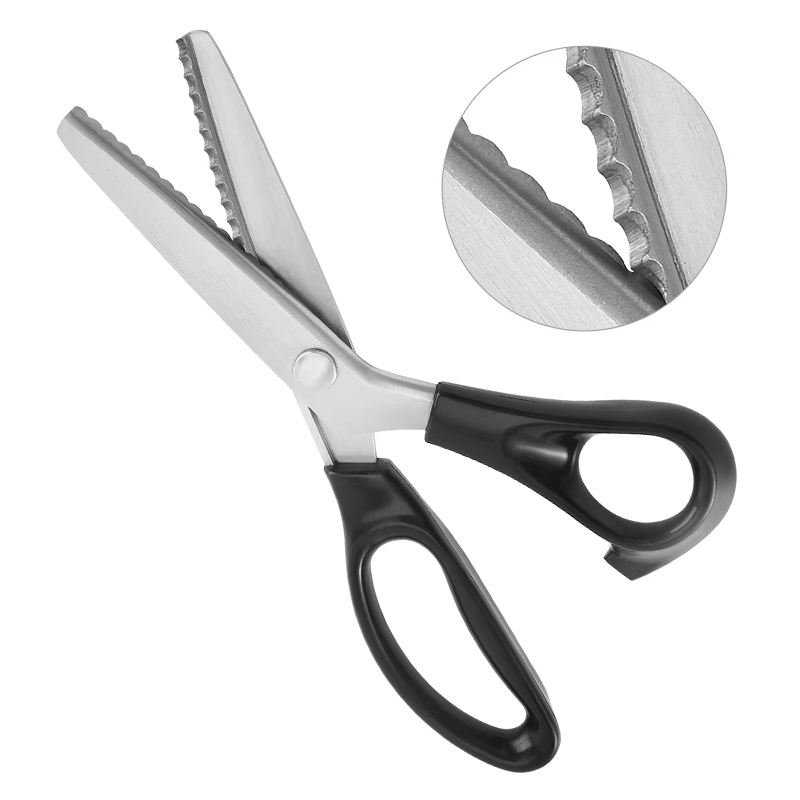
While fabric scissors demand respect, hair shears occupy an entirely different tier of precision tools. Professional cosmetology shears cost $300-1,000+ and feature Japanese steel, convex edges, and tolerances measured in microns. Using hair shears on anything except hair risks catastrophic damage and may provoke justifiably extreme reactions from their owners. [salonshearsdirect]
Hairstylists depend on perfectly maintained shears for their livelihood—a dulled edge can damage client hair, ruin cut precision, and cost hundreds in emergency replacement. As one industry saying goes: "Touch a stylist's shears without permission, and you've crossed a line that scissors can't cut." [salonshearsdirect]
The most practical solution is maintaining separate scissors for different materials:
- Fabric scissors: Reserved exclusively for textiles, never paper or plastic
- Paper scissors: Designated for all paper products, including cardstock
- Craft scissors: General-purpose cutting for mixed materials
- Kitchen shears: For food packaging, twine, and household tasks
Mark each pair clearly with colored tape or labels to prevent accidental misuse by family members or colleagues. [so-sew-easy]
Store fabric scissors in protective cases or pouches when not in use. This prevents: [salonshearsdirect]
- Accidental drops that can bend blade alignment
- Dust accumulation that accelerates wear
- Unauthorized borrowing by household members
- Contact with other metal tools that can nick edges
For professional workshops, consider lockable storage for premium shears—it sounds extreme, but prevents costly damage from well-meaning but uninformed helpers. [so-sew-easy]
Professional sharpening can restore scissors experiencing:
- General dulling from normal fabric use
- Minor edge rolling from cutting thick materials
- Slight misalignment from tension adjustment needs
- Surface rust from improper storage
Replace scissors showing:
- Deep nicks or chips in the blade edge
- Bent blades that won't close properly
- Cracked or broken pivot points
- Significant rust penetration into the steel
Quality fabric scissors from manufacturers like Kingford Homeware, Gingher, or Kai typically last 10-20+ years with proper care and periodic sharpening. Budget scissors may warrant replacement after 2-5 years even with careful use. [usatoday]
As an OEM scissor manufacturer, we engineer our fabric shears with hardened carbon steel that undergoes multi-stage heat treatment to achieve optimal hardness (typically 56-58 HRC on the Rockwell scale). This hardness level provides the perfect balance: soft enough to be sharpenable, hard enough to maintain edge retention through thousands of cuts. [bigmarketing]
The hot-forging process aligns steel grain structure along the blade length, increasing strength and edge durability. Hand-grinding creates the precise bevel angles that enable clean fabric cutting. Every manufacturing step focuses on creating tools that will serve professionals reliably for decades—but only if users respect the scissors' intended purpose. [so-sew-easy]
The "crime" of cutting paper with fabric scissors isn't mere gatekeeping or craftsperson territoriality—it's rooted in material science and practical economics. Paper's mineral content measurably accelerates blade dulling, increases maintenance costs, and shortens the usable lifespan of precision cutting tools designed specifically for fabric applications. [threadsmonthly]
For professional sewers, quilters, and textile workers, fabric scissors represent essential tools of their trade. For manufacturers like Kingford Homeware Co., Ltd., they represent decades of metallurgical expertise and precision engineering. A small investment in dedicated paper scissors protects that larger investment and ensures your fabric shears deliver peak performance for years to come.
The next time you're tempted to grab those beautiful fabric shears for a quick paper-cutting task, remember: it's not just about tradition or territoriality. It's about protecting precision tools that genuinely cannot handle the abrasive minerals hiding in that innocent-looking sheet of paper.
Q: Will cutting paper one time permanently ruin my fabric scissors?
A: No, a single accidental paper cut won't cause permanent damage. However, you should immediately wipe the blades clean to remove paper fiber residue and mineral particles. Repeated paper cutting accelerates dulling significantly and may require professional sharpening 2-3 times more frequently. [reddit]
Q: What makes fabric scissors different from regular scissors?
A: Fabric scissors feature sharper blade angles (15-25 degrees vs. 30-40 degrees), higher-quality carbon steel, hot-forged construction, and hand-ground edges specifically designed to cut fabric without fraying or snagging. This precision makes them more vulnerable to damage from abrasive materials like paper. [usatoday]
Q: Can I sharpen fabric scissors at home to save money?
A: Professional sharpening is strongly recommended. Fabric scissors require precision flat-hone equipment and expertise to maintain proper blade geometry and cutting angles. DIY sharpening with home tools risks permanently damaging the edge and may cost more to repair than professional service would have cost initially. [salonshearsdirect]
Q: How often should I have my fabric scissors professionally sharpened?
A: For fabric-only use, professional sharpening every 12-18 months is typically sufficient. However, daily professional users may need quarterly sharpening, while scissors occasionally used on paper may require service every 4-6 months. Watch for signs like fabric folding instead of cutting cleanly or visible nicks in the blade edge. [threadbarecreations.blogspot]
Q: Are expensive fabric scissors really worth the investment?
A: Yes, for serious sewers and professionals. Quality fabric scissors from reputable manufacturers can last 10-20+ years with proper care and periodic sharpening. They provide cleaner cuts, reduce fabric fraying, enable more precise work, and ultimately cost less over their lifetime than repeatedly replacing budget scissors. For casual crafters, mid-range scissors offer a good balance of quality and affordability. [usatoday]
1. Big Marketing. (2025). *Manufacturing SEO: 10 Proven Strategies for Top Rankings*. Retrieved from https://bigmarketing.com/manufacturing-seo/
2. So Sew Easy. (2023). *Can You Cut Paper With Your Sewing Scissors?* Retrieved from https://so-sew-easy.com/cut-paper-with-sewing-scissors/
3. Threads Monthly. (2021). *Cutting Paper with Fabric Scissors: What 5 Pros Think*. Retrieved from https://threadsmonthly.com/cut-paper-with-fabric-scissors/
4. ScissorPedia. (2026). *Scissor Maintenance Guide*. Retrieved from https://www.scissorpedia.com/guides/scissor-maintenance/
5. Reddit r/sewing Community. (2026). *Will cutting paper with fabric scissors once ruin them?* Retrieved from
https://www.reddit.com/r/sewing/comments/1qfkbtl/will_cutting_paper_with_fabric_scissors_once_ruin/
6. Blog for Better Sewing. (2013). *Reader Question: Will Tissue Paper Dull My Shears?* Retrieved from http://www.blogforbettersewing.com/2013/04/reader-question-will-tissue-paper-dull.html
7. Threadbare Creations. (2024). *Quilting 101: Caring For Your Scissors*. Retrieved from https://threadbarecreations.blogspot.com/2024/02/quilting-101-caring-for-your-scissors.html
8. USA Today. (2023). *Can cutting paper damage high-end fabric shears?* Retrieved from https://www.usatoday.com/story/graphics/2023/12/16/can-fabric-shears-cut-paper/71884369007/
9. Salon Shears Direct. (2025). *Scissor Maintenance 101: How to Care for Your Shears Like a Pro*. Retrieved from https://salonshearsdirect.com/blog/scissor-maintenance-101-how-to-care-for-your-shears-like-a-pro/
10. Proshear US. (2025). *What Not to Use Fabric Scissors On*. Retrieved from https://proshearus.com/blogs/news/what-not-to-use-fabric-scissors-on


