
English 


Views: 222 Author: Kingford Scissors Publish Time: 2026-04-26 Origin: Site


Left-handed scissors are more than a niche accessory—they are essential tools for up to 10–15% of the global population who are left-handed, yet still underserved by mainstream scissor designs. As a professional OEM scissor manufacturer, we see every day how small engineering details dramatically change comfort, safety and cutting precision for left-handed users across crafts, home, office and industrial applications. [marketveep]

Most people only notice scissor handedness when they try to cut their right-hand fingernails with their left hand and suddenly feel how awkward it is. For left-handed users, that awkwardness is a daily experience because almost everything around them—from scissors to tools—is optimized for right-handed ergonomics.
From a manufacturing and design standpoint, left-handed scissors are harder to get right because:
- Scissors are not symmetrical: the blades overlap instead of meeting in the middle, which means handedness is "built in" to the blade geometry.
- Hand biomechanics are directional: the thumb pushes outward, fingers pull inward, and a right-handed design harnesses this motion to push blades together—if used in the left hand, it pushes them apart, causing poor cutting performance.
- Sightline matters: in right-handed scissors, the upper blade sits on the right side, so a right-hander sees the cutting line clearly, while a left-hander has that line obscured.
Scissor makers like Ernest Wright in Sheffield have long explained that when a left-hander uses a right-handed pair, the cutting force literally opens the blades instead of closing them, leading to snagging, frayed edges and hand fatigue. As an OEM, we observe the same in lab tests: improper handedness increases cutting resistance, micro-slippage on fabric or paper, and user frustration.
Below is a clear comparison of the main scissor types that left-handed users encounter.
| Type | Blade Orientation | Handle Design | User Sightline for Left-Hander | Typical Use Cases |
|---|---|---|---|---|
| Right-handed scissors | Upper blade on the right side | Right-thumb ergonomics | Poor: cut line is obscured | General stationery, low-precision cutting |
| Semi left-handed scissors | Blades still right-handed | Handles reversed for left grip | Better grip, but poor sightline | Occasional left-handed use, basic crafts |
| True left-handed scissors | Blades fully mirrored for left use | Left-thumb ergonomics | Clear, natural sightline | Professional tailoring, embroidery, industry |
| "Ambidextrous" scissors | Often still right-handed blades | Symmetric handles | Same as right-handed | Shared-use environments, schools, offices |
True left-handed scissors are a mirror image of right-handed designs, reversing both the blades and the handle ergonomics so the cut line is visible and the cutting force pushes blades together rather than apart. Before about 1970, these true left-handed models were extremely rare; even today, many "left" or "ambidextrous" products are actually right-handed in disguise.
Although scissors look simple, the mechanics are surprisingly sophisticated. A well-engineered pair balances blade geometry, pivot tension, handle shape and material hardness to deliver smooth, clean cuts with minimal effort.
From our R&D and production perspective, three critical engineering principles matter for left-handed scissors:
1. Blade overlap and lateral pressure
- In a right-handed pair, the right thumb blade sits closer to the body and thumb pressure pushes the blades together.
- In the left hand, using that same pair reverses the force direction so the blades separate slightly, causing tearing or incomplete cuts.
2. Sightline and cutting accuracy
- When the upper blade is on the right, a right-hander sees the cutting line; a left-hander sees mostly metal.
- Reversing the blades for a true left-handed pair aligns the visible edge with the left eye's natural line of sight, making precision work far more intuitive.
3. Ergonomic grip and load distribution
- Thumb and finger holes are sculpted for specific hand angles and force vectors.
- When a left-hander uses right-handed handles, the wrist angle becomes unnatural, increasing fatigue over long sessions, especially in crafts, tailoring and upholstery.
From a manufacturing OEM viewpoint, we treat left-handed ergonomics as a distinct product category, not a simple handle flip. This affects forging or stamping dies, grinding jigs, assembly processes, QC tolerances and even packaging instructions.
Many left-handed people simply "put up with" using right-handed scissors, often because they grew up being told to adapt or even to switch hands. Literature has captured this frustration with dark humor: one widely quoted claim suggests that thousands of left-handed people are injured annually using tools designed for right-handers.
In our OEM fieldwork and customer feedback analysis, we consistently see three patterns when left-handed users switch to a true left-handed design:
- Less strain and pain
Users report reduced finger pressure, fewer red marks on the thumb and less wrist twist during prolonged cutting.
- Better control on delicate materials
For embroidery, tailoring, and paper crafts, the ability to actually see the cutting line dramatically reduces mistakes and rework.
- Higher cutting quality in industrial settings
In upholstery or light manufacturing, precise left-handed tools reduce material waste and improve cut consistency across teams that include left-handed staff.
One user review we often see echoed in different words: *"I didn't realize how hard I was fighting the tool until I tried scissors actually made for my hand."* This is exactly why investing in dedicated left-handed tooling is not just inclusive—it is commercially rational.
As an integrated OEM manufacturer (R&D, production and sales), we support brands, wholesalers and producers worldwide in building complete left-handed scissor programs alongside standard lines. That experience highlights several practical considerations: [venveo]
1. Dedicated tooling and mirroring process
- True left-handed blades require mirrored forging or stamping tools, separate grinding profiles and sometimes custom heat-treatment patterns to preserve consistent cutting feel.
- QC must test both right- and left-handed pairs in real cutting scenarios, not only on hardness or sharpness metrics.
2. Handle engineering for left-hand ergonomics
- We design left-hand thumb rings slightly differently to support natural thumb extension and reduce pinch points.
- For soft-grip or bi-material handles, rubber densities and textures are tuned so the left-hand grip remains stable under lateral forces.
3. SKU planning: right/left ecosystems
- For professional markets (tailors, industrial users, salon, medical), we recommend mirroring key models: one right-handed SKU, one true left-handed SKU, clearly labeled.
- For mass retail or school markets, a mix of right-handed and carefully engineered "true ambidextrous" options can be planned, but expectations must be set honestly in packaging and marketing.
Because we act as OEM for multiple brands, we also help them validate left-handed designs with small test runs, user panels and incremental roll-outs before full global launches. This reduces risk while proving demand.
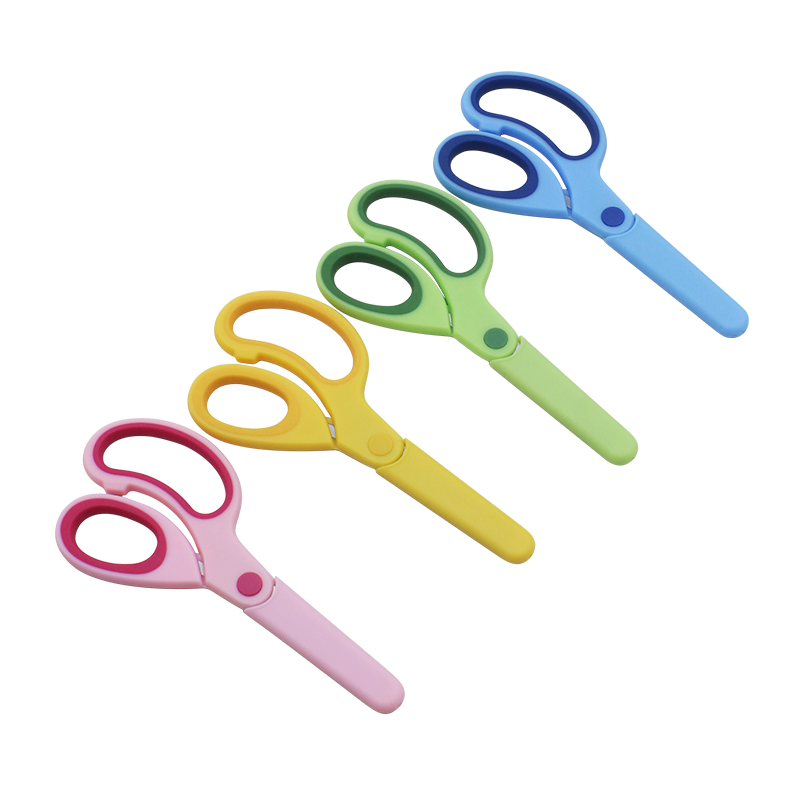
Many scissors are marketed as "ambidextrous," but in practice they only have symmetric handles, not true ambidextrous blades. For left-handed users, this still creates the same sightline and cutting-force problem as a standard right-handed pair.
From an expert standpoint, we encourage brands and buyers to verify:
- Blade position: For a true left-handed pair, when held in the left hand, the upper blade should sit on the left side, with the cutting edge visible from above.
- Pivot and lateral play: There should be minimal lateral "give"; blades must stay in full contact during the cut, even under the left-hand's natural pressure.
- Grip comfort for left-hand use: No sharp mold lines, no forced wrist rotation, and enough space for the left thumb and fingers at natural angles.
There are patented designs for genuine ambidextrous scissors, including double-edged blades and a handle that can rotate nearly 360 degrees so the back edges can cut in either hand. These are rare in the market and more complex to produce, but they illustrate how far mechanical innovation can go to solve handedness challenges.
As an OEM supplier to multiple sectors, we see left-handed needs show up in repeatable patterns. Below are examples of where true left-handed scissors make a measurable difference.
In embroidery, quilting, pattern cutting and fine tailoring, the ability to see the cutting line is non-negotiable. Left-handed crafters using right-handed scissors often compensate by twisting fabric, leaning their head or over-rotating the wrist, all of which reduce precision and increase fatigue.
Well-designed left-handed scissors support:
- Clean cutting right up to the tip on delicate fabrics.
- Stable control along curved pattern lines.
- Reduced snagging on multi-layer materials used in quilting or costume design.
In upholstery or light industrial cutting (foam, leather, heavy textiles), the cutting forces are higher, and the risk of hand strain is greater. True left-handed shears with optimized leverage and blade hardness:
- Distribute force more efficiently through the left-hand grip.
- Maintain blade contact along long cuts, even through dense materials.
- Reduce material waste caused by misaligned cuts and wandering lines.
Left-handed children using right-handed school scissors often learn that "they are the problem," when in fact the tool is wrong. Providing left-handed scissors in school kits and office supply programs:
- Improves safety and reduces cutting accidents in classrooms.
- Builds confidence and comfort with fine motor tasks.
- Signals inclusivity and attention to real-world ergonomics in institutions and workplaces.
For brands, importers and wholesalers, there is a clear opportunity: left-handed customers are loyal when they finally find tools that work for them. Leveraging our OEM capabilities, we typically recommend the following roadmap:
1. Identify core product families
- Start by mirroring your best-selling right-handed SKUs in key segments (craft, office, professional textile, kitchen).
- Use keyword research around terms like "left-handed scissors," "true left-handed shears" and "left-handed fabric scissors" to understand demand. [marketveep]
2. Define specifications by user scenario
- For crafts: prioritize tip sharpness, lighter weight, and high visibility of the cut line.
- For industrial: prioritize blade hardness, leverage, handle durability and safety features.
3. Integrate user feedback and reviews
- Collect real comments from left-handed users on grip comfort, sightline and cutting performance, and feed this into your next iteration. [lite14]
- Use selected reviews as case studies in your marketing—focus on specific use cases and outcomes, not generic praise. [custify]
4. Educate the market
- Publish blog posts, how-to guides and comparison charts explaining the difference between right-handed, semi-left, true-left and "ambidextrous" designs. [wgcontent]
- Clarify in product pages whether a model is truly left-handed (blades and handles mirrored) rather than just "comfortable for left-handers."
By combining technical precision with real user stories, brands can build both E-E-A-T-friendly content and genuine trust among left-handed buyers. [eway-crm]
If you are left-handed—or if you buy for left-handed customers—these simple checks will help you choose the right tool:
1. Look at the blades
- Hold the scissors in your left hand as if cutting.
- If the upper blade sits on the left side and you clearly see the cutting line, you're likely holding a true left-handed pair.
2. Test the cut and feel
- Try cutting paper or fabric from the base to the tip.
- If the blades glide smoothly without tearing and your wrist feels natural, the ergonomics are correct for your hand.
3. Consider your main usage
- Occasional household use: a quality left-handed general-purpose pair may be enough.
- Professional or daily use: invest in purpose-built left-handed models for your domain (tailoring shears, embroidery scissors, kitchen, industrial).
As an OEM manufacturer, we standardize these tests in our QC process, ensuring that every left-handed SKU performs consistently across batches and production runs.
If you are a brand owner, wholesaler or manufacturer serving international markets, now is the time to treat left-handed scissors as a strategic product line, not just an optional add-on. By collaborating with a specialized OEM manufacturer like us, you can:
- Build a complete, quality-tested left-handed portfolio across craft, office, kitchen and industrial categories.
- Differentiate your brand with inclusive, ergonomically engineered tools for both right- and left-handed users.
- Back your marketing with authentic technical expertise, user feedback and long-term product consistency.
Talk to our engineering and sales teams about developing your next left-handed scissor series—from blade geometry and handle design to packaging and branding—to ensure that every customer, in every hand, gets scissors that truly work the way they are supposed to.
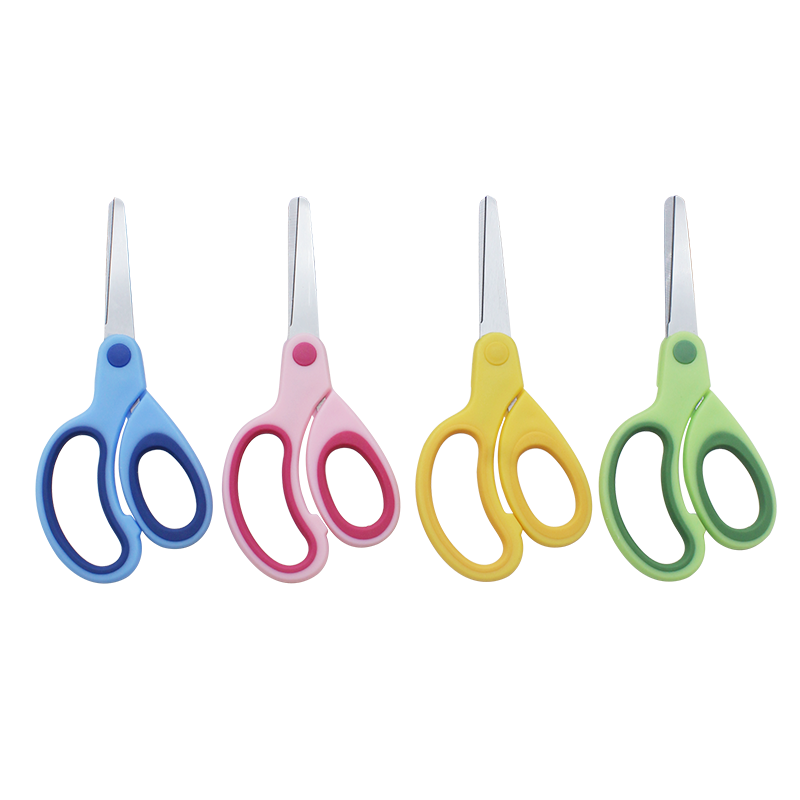
1. Are left-handed scissors really necessary, or can left-handers just adapt?
Left-handers can adapt to right-handed scissors, but they often experience more strain, less precision and a blocked view of the cutting line. True left-handed scissors align force, sightline and ergonomics with the left hand, improving comfort and cut quality, especially for regular or professional use.
2. What is the difference between semi left-handed and true left-handed scissors?
Semi left-handed scissors only reverse the handle grips for a more comfortable opening and closing in the left hand but keep right-handed blade orientation, so the sightline issue remains. True left-handed scissors fully mirror the right-handed design, reversing both blades and handles to restore natural cutting mechanics and visibility.
3. Why are most "ambidextrous" scissors still uncomfortable for left-handed users?
Many ambidextrous models only use symmetric handles but retain right-handed blade orientation. This means left-handers still cannot clearly see the cut line and the applied force tends to separate the blades rather than press them together.
4. How can brands test whether their left-handed scissors are truly left-handed?
Have left-handed testers hold the scissors in their left hand, check that the upper blade sits on the left, and perform real cutting tests on typical materials. If users report clear sightlines, smooth cutting and natural wrist positions, the model is likely a true left-handed design.
5. What industries benefit the most from true left-handed scissors?
Industries with high-precision or high-frequency cutting—such as tailoring, embroidery, upholstery and light manufacturing—benefit significantly, as do schools and offices with left-handed staff and students. In these environments, better ergonomics improve safety, reduce fatigue and help maintain consistent cutting quality.
1. Ciselier. "Left-handed scissors: so hard to find!!"
<https://ciselier.com/blogs/news/this-is-blog-3>
2. MarketVeep. "4 Best Practices for Your Content SEO Strategy in Manufacturing."
<https://www.marketveep.com/blog/4-best-practices-for-your-content-seo-strategy-in-manufacturing> [marketveep]
3. WG Content. "E-E-A-T for content quality."
<https://wgcontent.com/blog/eeat-content-quality-seo-geo/> [wgcontent]
4. Lite14. "How to Leverage User Reviews for Blog Content Creation."
<https://lite14.net/blog/2024/09/16/how-to-leverage-user-reviews-for-blog-content-creation/> [lite14]
5. Venveo. "SEO For Manufacturing: 8 Best Ways For Manufacturers To Attract Leads."
<https://www.venveo.com/blog/content-marketing/seo-for-manufacturing-companies> [venveo]
6. eWay-CRM Blog. "How to Apply E-E-A-T Principle in Your Content."
<https://www.eway-crm.com/blog/sales-marketing/information-is-now-a-commodity-google-is-focused-on-e-e-a-t-and-we-can-see-why/> [eway-crm]
7. Custify. "10 Ways Customer Reviews Can Enrich Your Content."
<https://www.custify.com/blog/customer-reviews-can-enrich-content/> [custify]
8. Shopify. "SEO内容写作:优势和最佳实践分享."
<https://www.shopify.com/zh/blog/seo-content-writing> [shopify]
9. Yooopaaa. "五金工具B2B工厂外贸网站如何做Google谷歌SEO优化关键字排名?"
<https://www.yooopaaa.com/642> [yooopaaa]
10. Passionfruit. "How to Optimize Your Ecommerce Site for EEAT in 2025 (Like a Pro)."
<https://www.getpassionfruit.com/blog/how-to-optimize-your-ecommerce-site-for-e-e-a-t-in-2025-(like-a-pro)> [getpassionfruit])


