
English 


Views: 222 Author: Kingford Scissors Publish Time: 2026-04-13 Origin: Site


If you work with fabric, leather or paper all day, the right sidebent scissor is not just a tool; it is an extension of your hand, your posture, and your productivity. As a professional OEM scissor manufacturer serving brands worldwide, I have seen how a small detail—like bending the handle away from the table—can transform comfort, accuracy and long‑term reliability. This article takes you through the real history of the sidebent scissor, explains why it matters for modern textile and manufacturing workflows, and shows how to choose and design sidebent shears that actually support your business. [whiteley.co]
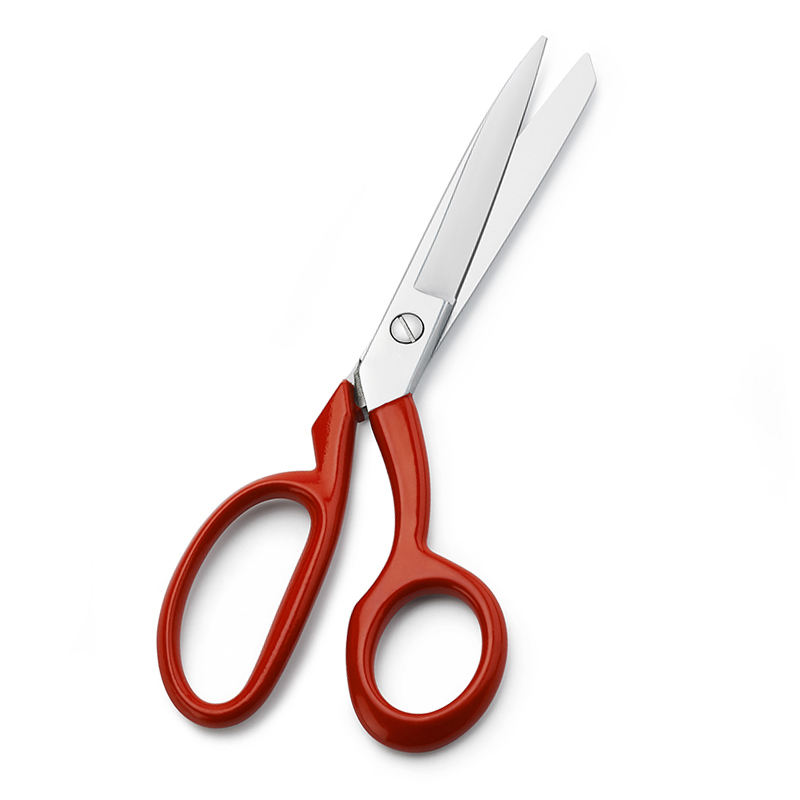
Sidebent scissors are shears where the handle is bent at the shank, so the blades stay flat on the cutting surface while the user's hand is lifted above the table. In practice, this simple bend changes the entire cutting experience for sewing rooms, upholstery shops and manufacturing lines. [ciselier]
Key characteristics of sidebent scissors: [whiteley.co]
- Blades rest flat along the table or cutting mat for stable, straight cuts
- Handle is raised upward to improve ergonomics and reduce wrist strain
- Bows (finger and thumb rings) are often larger and more curved for multi‑finger grip and comfort
- Typically used as dressmaker's shears, tailoring scissors and industrial fabric cutters
In most modern sewing and textile environments, professional users will instinctively reach for sidebent shears whenever accuracy, speed and comfort all matter at the same time. [ciselier]

For most of their 4,000‑year history, scissors featured straight shanks between the pivot and the bows. Early designs relied on varying bow sizes and grip configurations to generate more force, but the blades themselves did not accommodate the reality of cutting on flat tables for long hours. [whiteley.co]
In 1800, Thomas Wilkinson of Sheffield, England—already a center of scissor and cutlery excellence—patented the sidebent handle design that still defines most high‑quality dressmaker's shears today. His innovation bent the thumb bow upward, away from the finger bow, allowing the blades to remain flat on the table while the hand operated comfortably above the work surface. [ciselier]
Why Wilkinson's design was revolutionary: [whiteley.co]
- Reduced disturbance and bunching of fabric while cutting on a table
- Made it easier to follow long, straight or gently curved cutting lines
- Allowed larger bows to accommodate multiple fingers for increased cutting force
- Improved posture and reduced strain for tailors and industrial cutters working all day
Once Wilkinson's patent expired, manufacturers around the world rapidly incorporated the sidebent handle into their own scissors and shears, establishing it as the new standard for professional fabric cutting. [whiteley.co]
From my experience working with textile brands, upholstery factories and garment manufacturers, sidebent scissors remain indispensable because they unify precision, comfort and durability in daily operations. [alanrichardtextiles]
Keeping the lower blade flat on the cutting surface minimizes fabric lifting, shifting and distortion. This is critical when cutting: [ciselier]
- Multi‑layer fabric stacks
- Slippery materials (silk, satin, linings)
- Structured textiles (denim, canvas, upholstery)
By stabilizing the fabric against the table, sidebent shears reduce cumulative measurement errors, which directly impacts fit, material yield and waste in production. [alanrichardtextiles]
The raised handle of a sidebent scissor encourages a more neutral wrist position and reduces the need to lift the arm away from the table while cutting. Over an eight‑hour shift, this ergonomic detail can mean fewer repetitive‑strain complaints and more consistent quality from experienced operators. [ciselier]
Typical ergonomic benefits include: [whiteley.co]
- Less wrist extension and ulnar deviation
- Reduced shoulder elevation when cutting long runs
- Better leverage when using multiple fingers in the larger bow
Professional scissor users often describe sidebent shears as "less tiring" and "more controlled," especially on heavy fabrics.
While the core geometry of Wilkinson's design remains, modern sidebent scissors integrate advanced steels, surface treatments and handle engineering to meet industrial requirements. [alanrichardtextiles]
Professional sidebent shears typically use high‑carbon stainless steels or alloy steels tuned for hardness, edge retention and toughness. [maggieframes]
Important factors we consider as an OEM manufacturer:
- Hardness range: Balanced to keep a sharp edge while resisting chipping during heavy use
- Edge geometry: Fine ground edges for clean textile cuts; more robust edges for leather or technical textiles
- Surface finishing: Polishing or coatings that reduce friction and resist corrosion
For brands, these choices directly influence user satisfaction, maintenance cycles and long‑term cost of ownership. [maggieframes]
Sidebent scissors are more than just blades; the handle ergonomics and overall balance determine how they feel over thousands of cuts. [alanrichardtextiles]
When we design or customize sidebent models, we focus on:
- Handle bow size for different hand sizes and grip styles
- Weight distribution between blade and handle for stable, controlled movement
- Textured or soft‑touch coatings to improve grip security
A well‑balanced sidebent scissor feels like it "tracks" along the cutting line, requiring minimal correction from the user's wrist and fingers.
Sidebent scissors are now used far beyond traditional tailoring rooms, and understanding these contexts helps you specify the right model for your customers. [safetyculture]
In garment factories and sample rooms, sidebent dressmaker's shears are used for: [alanrichardtextiles]
- Cutting garment pieces from layups or single layers
- Trimming seam allowances and notches
- Working with linings, interfacings and delicate fabrics
High‑precision cutting at this stage protects sizing accuracy and reduces rework later in the production chain. [alanrichardtextiles]
Upholstery workshops and technical textile plants rely on heavier, longer sidebent shears capable of handling: [safetyculture]
- Thick upholstery fabrics and backing materials
- Coated technical textiles and composites
- Multi‑layer industrial fabrics used in automotive or furniture manufacturing
Here, blade stiffness, edge strength and handle leverage are just as important as ergonomic comfort.
In regulated production environments, scissors and cutters are often subject to documented inspection and safety checks. Scissors inspection logs may include: [safetyculture]
- Blade integrity and sharpness
- Handle condition and secure assembly
- Correct cutting technique and operator training
- Contamination prevention and storage procedures
When we design sidebent scissors for industrial customers, we ensure they align with these safety and quality management practices, simplifying compliance and audits. [safetyculture]
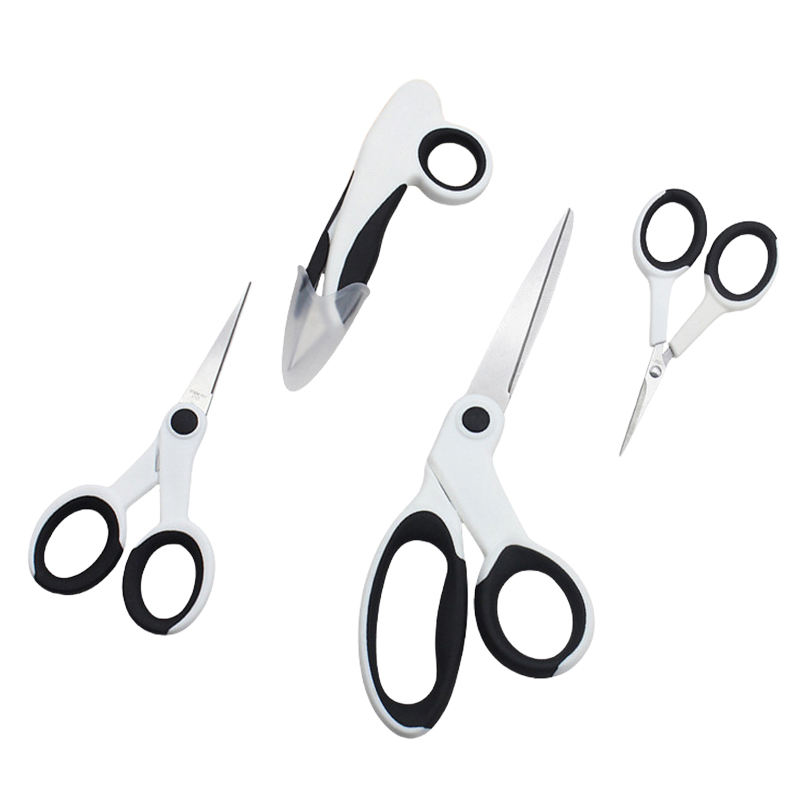
From a brand or procurement perspective, choosing the right sidebent scissor is both a technical and commercial decision. Below is a practical framework we often use with our OEM clients.
1. Define primary materials
- Light fabrics (cotton, polyester, lining)
- Heavy fabrics (denim, canvas, upholstery)
- Leather or technical textiles
2. Specify blade length and weight range
- Shorter blades for detailed work and small hands
- Longer blades for straight, long cuts on the table
3. Clarify usage intensity
- Occasional, daily or high‑volume industrial use
- Expected hours of cutting per operator per day
4. Determine ergonomic priorities
- Left‑hand or right‑hand users
- Hand size distribution among staff
- Need for soft‑touch grips or special coatings
5. Set quality, branding and budget targets
- Retail positioning vs industrial internal tool
- Required branding (logo, color, packaging)
- Warranty and lifespan expectations
By working through these steps, brands can partner with a manufacturer to specify sidebent scissors that truly match their customers' real‑world cutting challenges. [alanrichardtextiles]
As a dedicated OEM scissor manufacturer, we collaborate with international brands, wholesalers and producers to turn sidebent scissor concepts into market‑ready products.
Successful scissor lines are built on real user feedback: complaints about tired hands, inconsistent cutting, or handles that feel too small. When a brand shares user reviews and issues with us, we typically: [campaigncanada]
- Analyze recurring themes (comfort, sharpness, rust, weight, etc.)
- Translate those themes into engineering changes (steel choice, bow geometry, surface finish)
- Prototype, test and refine sidebent models in collaboration with the client
This loop turns qualitative feedback into measurable improvements in ergonomics, durability and cutting performance.
Every market segment—from entry‑level dressmaker's shears to premium tailor's sidebents—requires a different performance‑to‑price balance. As an OEM, we help clients choose: [campaigncanada]
- Blade materials and heat‑treatment levels suited to their price point
- Handle designs that align with brand identity and user expectations
- Packaging and accessories (sheaths, cases) that reinforce perceived value
When done correctly, the result is a sidebent scissor line that feels authentic to the brand and trusted by professionals.
Even the best‑designed sidebent scissors require proper care to preserve their cutting quality and alignment over time. [maggieframes]
Professionals who rely on their shears usually adopt a simple routine: [maggieframes]
- Wipe blades clean after each session to remove lint, adhesives or residues
- Store scissors in a dry environment, preferably in a case or on designated racks
- Avoid dropping or using the blades on hard surfaces (like cutting wire or metal)
These habits significantly extend service life and keep cutting feel consistent.
For fine work—especially on textiles and embroidery—a properly sharpened edge is essential. We advise brands and end users to: [maggieframes]
- Use trained sharpeners familiar with textile shears, not generic knife sharpeners
- Maintain original edge geometry wherever possible
- Combine sharpening with inspection of pivot tension and alignment
Some industrial clients integrate scissor inspection and servicing into broader tool maintenance programs to ensure long‑term performance. [safetyculture]
If your brand or factory relies on sidebent scissors, working with a specialized OEM manufacturer can turn user feedback and market insights into better tools and stronger product lines. We support global brands, wholesalers and producers with custom development, sampling and scaled production of sidebent shears tailored to specific materials, users and price points. [campaigncanada]
Whether you need an entry‑level dressmaker's scissor for craft markets or a heavy‑duty sidebent shear for industrial upholstery, you can collaborate with us to design and produce sidebent scissors that truly reflect your brand's standards. Reach out to our team to discuss your requirements, share current user feedback and start co‑developing your next generation of professional sidebent scissors.
1. Why are sidebent scissors better for fabric cutting than regular household scissors?
Sidebent scissors keep the lower blade flat on the table, which stabilizes the fabric and reduces distortion, while the raised handle improves comfort and control for long, straight cuts. [whiteley.co]
2. Are sidebent scissors only for professional tailors and dressmakers?
No, sidebent shears benefit anyone cutting fabric on a table, from home sewists to industrial operators, because they combine ergonomics with clean, accurate cutting. [ciselier]
3. What blade length should I choose for sidebent dressmaker's shears?
Shorter blades are ideal for detailed work or small hands, while longer blades suit cutting long pattern pieces or multiple layers on a table; brands often offer a range to fit different users. [alanrichardtextiles]
4. How often should sidebent scissors be sharpened?
Sharpening frequency depends on usage intensity and materials, but professional users typically schedule regular maintenance and sharpening to keep edges clean and precise for fine textile work. [safetyculture]
5. Can sidebent scissors be customized with our brand logo and handle color?
Yes, OEM manufacturers commonly customize sidebent scissors with branded logos, color schemes, packaging and even modified handle designs to align with a client's market positioning and user profile. [campaigncanada]
1. Ciselier Company – "The History of the Sidebent Scissor"
https://ciselier.com/blogs/news/the-history-of-the-sidebent-scissor [ciselier]
2. Whiteley – "The Evolution of the Sidebent Handle"
https://www.whiteley.co.uk/advice-news/resources/the-evolution-of-the-sidebent-handle/ [whiteley.co]
3. SafetyCulture – "Scissors and Cutters Inspection Log for Production"
https://safetyculture.com/library/manufacturing/scissors-and-cutters-inspection-log-ho0vjw9hq6ciywpf [safetyculture]
4. Alan Richard Textiles – "The Ultimate Guide to Scissors: Types, Uses, & Benefits Across Industries"
https://alanrichardtextiles.com/blogs/news/ultimate-guide-to-scissors [alanrichardtextiles]
5. Maggie Frames – "Antique Scissor Guide: History, Restoration, and Modern Applications"
https://www.maggieframes.com/blogs/embroidery-blogs/antique-scissor-guide-history-restoration-and-modern-applications [maggieframes]
6. Campaign – "A Scissor Company That's A Cut Above"
https://www.campaigncanada.ca/article/1854887/scissor-company-thats-cut-above [campaigncanada]


