
English 


Views: 222 Author: Amanda Publish Time: 2026-02-08 Origin: Site


Content Menu
● What Are “Types of Scissors” and Why They Matter
● Main Categories of Scissors (Overview Table)
● Kitchen Scissors and Food Shears
● Sewing, Tailoring, and Fabric Scissors
>> Tailor's shears and dressmaker's shears
● Embroidery, Craft, and Hobby Scissors
● Hairdressing and Barber Scissors
● Children's and School Scissors
● Industrial, Upholstery, and Heavy‑Duty Shears
● Medical, Emergency, and Specialty Scissors
● Garden, Pruning, and Outdoor Scissors
● How Steel Composition and Hardness Affect Scissor Performance
● Expert Guide: How to Choose the Right Types of Scissors for Your Needs
>> Step 1 – Define materials and use frequency
>> Step 2 – Match scissors category to application
>> Step 3 – Evaluate build quality
● OEM Perspective: Why Working with a Professional Scissors Manufacturer Matters
● Call to Action: Build Your Scissors Line with a Professional OEM Partner
● FAQs About Types of Scissors
>> 1. What is the difference between scissors and shears?
>> 2. Why do my scissors become dull so quickly?
>> 3. Do I really need different scissors for kitchen, fabric, and paper?
>> 4. What should I look for in professional hairdressing scissors?
>> 5. How can I tell if my scissors are high quality?
Most people rely on one dull, loose pair of general scissors in a kitchen drawer, but modern homes, workshops, salons, and factories use highly specialized scissors for specific materials and tasks. This guide explains the main types of scissors, how they are used, and how to choose the right models for long‑term performance, safety, and comfort.

Different types of scissors combine specific blade geometry, steel hardness, handle design, and joint construction to cut certain materials cleanly and safely. Using the wrong or a poor‑quality pair increases hand fatigue, causes ragged edges, and can damage the workpiece or the scissors themselves.
For OEM buyers, retailers, and serious users, understanding categories such as kitchen scissors, tailor shears, hairdressing scissors, and industrial shears helps you build a tool set that actually matches your applications rather than relying on one “general” pair.
Below is a practical overview of major scissor categories and their typical uses.
Category | Typical Length | Main Materials Cut | Typical Users | Key Features |
General/household scissors | 6–8 in | Paper, light plastic, packaging | Home, office | Straight blades, simple handles, all-purpose use |
Kitchen scissors/shears | 7–9 in | Poultry, meat, herbs, packaging | Home cooks, chefs | Serrated blades, bone notch, bottle opener, nutcracker in shanks |
Sewing & tailoring scissors | 5–10 in | Fabric, thread, lining | Sewists, tailors | Sidebent design, long blades, high hardness for textiles |
Embroidery & craft scissors | 3–5 in | Thread, paper, thin fabric | Crafters, embroiderers | Fine tips, decorative shapes, high precision |
Hairdressing scissors | 5–7 in | Human hair | Barbers, stylists | Hollow-ground blades, offset handles, thinning teeth variants |
Kids' scissors | 4–5 in | Paper, card | Children, schools | Rounded tips, plastic handles, safety design |
Industrial & utility shears | 8–12 in | Cardboard, leather, carpet, wire | Factories, workshops | Thick blades, high-carbon steel, heavy-duty pivot |
Medical & emergency shears | 5–8 in | Bandages, clothing, tissue | Hospitals, EMTs | Blunt tips, angled blades, specific medical patterns |
Garden & pruning shears | 6–10 in | Stems, branches | Gardeners | Spring-loaded handles, bypass or anvil blades |
General household scissors are all‑purpose tools designed to cut light materials such as paper, plastic packaging, ribbon, and thin card. They usually feature straight blades, standard plastic or metal handles, and a simple pivot screw that balances durability with low cost.
Key points for users and OEM buyers:
- Choose stainless steel blades for corrosion resistance in kitchens and humid environments.
- Look for comfortable, ambidextrous handles for family or office use.
- For branding, handle color and soft‑touch inserts are easy ways to differentiate a basic model line.
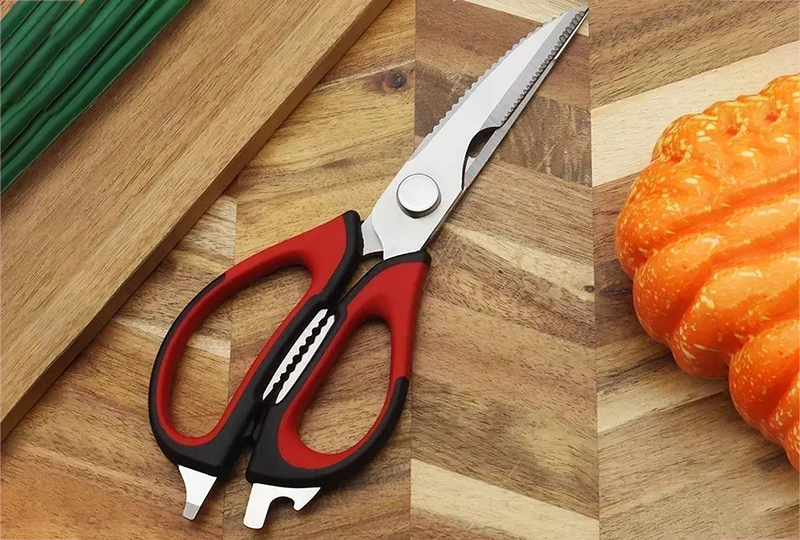
Kitchen scissors, sometimes called poultry shears or food scissors, are engineered for cutting meat, poultry bones, herbs, and food packaging. Quality models often replace several tools by integrating utility functions into the shanks and handles.
Typical design features:
- One serrated blade to grip slippery chicken skin or meat.
- A semi‑circular notch in the lower blade to hold small bones while cutting.
- Built‑in cracker in the shanks for nuts or shellfish and an opener near the bow for lids or bottle caps.
Tailor's shears are long, heavy‑duty fabric scissors designed for cutting multiple layers of cloth with precision along the table surface. The classic pattern is sidebent, where the handles angle upward so the bottom blade stays flat on the cutting surface.
Important characteristics:
- Long blades (8–12 in) for smooth, continuous cuts along fabric.
- High‑carbon steel or hardened stainless blades for long‑lasting sharpness.
- Ergonomic handle shaping to reduce fatigue during long cutting sessions.
Static‑cut designs, where the bottom blade does not move, were historically used for heavy fabrics and are now mostly collector's items due to their weight and specialized use.
Pinking shears cut a zigzag pattern that helps reduce fraying on fabric edges and adds decorative borders on felt, paper, and other craft materials. They use serrated teeth along the blades and require more cutting force than smooth‑edge shears, so handle comfort and steel hardness are important.
Usage tips:
- Avoid cutting straight across the bias in ways that place all zigzag tips on the straight‑of‑grain, as this may still encourage fraying.
- Reserve pinking shears for fabric and craft materials only; cutting wire or very thick cardboard can damage the teeth.
Buttonhole scissors are specialized sewing tools with notched blades and adjustable stops that let you cut neat openings without slicing through the fabric edges. They are especially useful on jackets, shirts, and tailored garments where consistent buttonhole length is critical.
Embroidery scissors are small, sharp tools with fine tips for trimming thread, yarn, and small fabric details. Many designs feature decorative shapes, such as the well‑known stork pattern, which has become popular in modern sewing baskets.
Craft and hobby scissors come in multiple sub‑types:
- Micro‑tip scissors for detailed paper cutting and scrapbooking.
- Decorative edge scissors that cut waves or scallops for card‑making.
- Small thread snips used one‑handed to quickly trim loose threads, an important type sometimes missed in general guides.
Hairdressing scissors use carefully engineered blade geometry and handle ergonomics to achieve clean hair cuts with minimal strain on the stylist's hand. Professional models are typically made from high‑hardness stainless steel or alloy steel to maintain a razor‑sharp edge.
Common sub‑types include:
- Straight cutting scissors for baseline haircuts and blunt lines.
- Thinning/texturizing shears with teeth that remove only part of the hair for layered and blended looks.
- Offset and crane handles that reduce wrist angle and improve comfort during long use.
High‑end models often use cobalt or molybdenum alloy steels and precisely tuned tension adjustment at the pivot to balance smooth action with control.
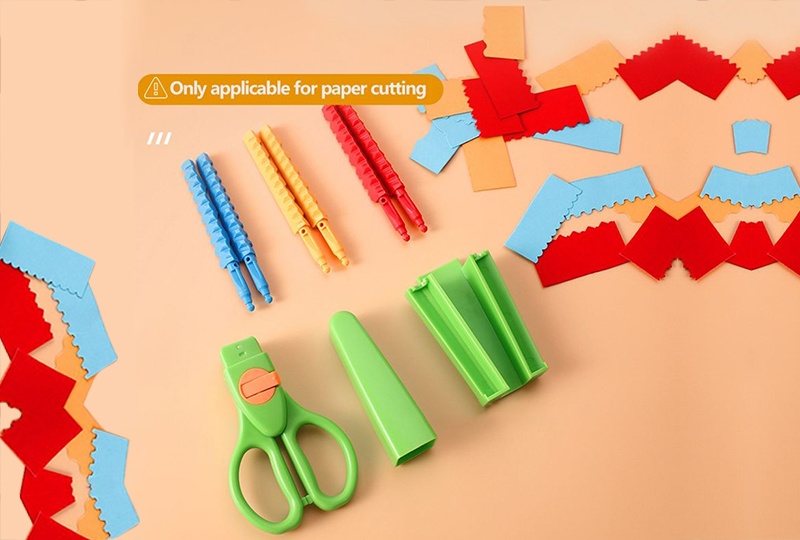
Children's scissors are designed with safety as the first priority. They generally feature rounded tips, plastic handles sized for small hands, and blade edges tuned for paper rather than fabric or hard materials.
Key considerations for parents, schools, and OEM buyers:
- Rounded tips help prevent puncture injuries during classroom activities.
- Lightweight construction and bright colors improve usability and identification.
- Stainless blades with limited sharpness can still cut paper but are less likely to cause accidental cuts.
Industrial scissors and shears are used in upholstery, leatherwork, packaging, and general manufacturing, where they must cut thicker and more abrasive materials. Upholstery shears often resemble tailor's shears but with even thicker, harder blades and reinforced pivots.
Typical applications:
- Cutting multiple layers of fabric, canvas, or technical textiles in upholstery shops.
- Trimming carpet, rubber, and industrial felt.
- Cutting plastic strapping, heavy cardboard, and light metal mesh in packaging and assembly operations.
Selecting the right heavy‑duty shears involves balancing blade hardness, corrosion resistance, and handle comfort, especially for workers using these tools all day.
Specialized medical and emergency scissors are engineered for safety around skin and tissue while still cutting tough materials.
Important examples include:
- Trauma shears that slice through clothing, seat belts, and gear, with a blunt lower tip that slides under material without injuring the patient.
- Bandage scissors featuring an angled, blunt tip specifically to lift bandages away from skin while cutting.
- Surgical scissors such as Metzenbaum or Mayo scissors that are precision instruments used to cut tissues or sutures in operating rooms.
For buyers in this segment, regulatory compliance, biocompatible materials, and strict quality control at the pivot joint and blade finish are critical.
Garden and pruning scissors, often called pruners or garden shears, are designed to cut stems and light branches without crushing plant tissue. They use either bypass blades, where two curved blades slide past each other, or anvil designs, where a straight blade meets a flat surface.
Key features:
- Spring‑loaded handles to reduce hand fatigue and speed up repetitive cuts.
- High‑carbon or alloy steel blades with corrosion‑resistant coating for outdoor use.
- Safety locks to keep blades closed when carried or stored.
The steel used in scissor blades has a major impact on cutting performance, edge retention, and corrosion resistance. Quality scissors typically use stainless or high‑carbon steels with carefully controlled additions of alloying elements.
Important steel components include:
- Carbon to increase hardness and allow a sharper, more durable edge.
- Molybdenum and chromium for hardness and corrosion resistance, especially important in kitchen and medical scissors.
- Manganese, vanadium, cobalt, and titanium to improve toughness, balance, edge stability, and weight.
This section adds practical, buyer‑oriented value so both end‑users and procurement teams can make informed decisions.
Start by listing what you cut most often, how frequently, and in what environment. For example, a professional tailor cutting heavy wool daily needs very different scissors than a home user opening packages a few times per week.
- For everyday home and office tasks, choose general household scissors with stainless blades and comfortable handles.
- For food preparation, use dedicated kitchen scissors that can be disassembled for cleaning and include a serrated blade.
- For sewing, invest in one pair of dressmaker's shears, one pinking shear, and small embroidery scissors for detail work.
- For industrial or workshop use, select heavy‑duty shears rated for your thickest materials.
High‑quality scissors usually share these traits:
- Tight but smooth pivot with little side‑to‑side play.
- Even blade contact along the full cutting edge when closing.
- Comfortable handle shape that fits the primary user's hand size and grip strength.
For brands, wholesalers, and other manufacturers, partnering with an experienced OEM scissors supplier is critical to maintain consistent quality across different scissors types. A capable OEM partner can adapt blade materials, heat treatment, handle design, and surface finishing to match your target market and price point.
A strong OEM scissors manufacturer typically provides:
- Engineering support to optimize blade hardness and geometry for specific materials.
- Multiple handle materials and colors for branding.
- Quality systems and testing to ensure cutting performance and safety requirements are met.
If you are building a private‑label line that spans household, kitchen, sewing, and industrial scissors, consolidating production with one full‑range OEM simplifies procurement and ensures visual and functional consistency across your catalog.
If you are a brand owner, wholesaler, or manufacturer looking to expand your scissors range, it is essential to work with a partner that understands both traditional craft and modern production. A dedicated OEM scissors manufacturer can help you select the right types of scissors, specify steel grades and hardness, and design ergonomic handles that meet your market's expectations for quality and safety.
By collaborating early on product design and performance requirements, you can launch a complete, consistent scissors collection that supports your brand story and gives your customers the right tool for every task. Contact our team today to discuss your project requirements, request samples, and start developing a tailored scissors program that fits your target markets and price segments.
Contact us to get more information!
In everyday use the terms overlap, but many experts use “shears” for longer tools with one larger handle (often for fabric or heavy materials) and “scissors” for smaller, symmetrical‑handle tools. Shears typically offer more leverage and are better for multi‑layer or heavy‑duty cutting.
Scissors dull quickly when used on materials they were not designed for, such as cutting wire with fabric shears, or when made from low‑hardness steel. Dirt, adhesive residues, and lack of cleaning also accelerate edge wear and corrosion.
Using dedicated kitchen, fabric, and paper scissors keeps blades sharper for longer and improves hygiene in food preparation. Fabric scissors used only on textiles also provide cleaner cuts and less fraying.
Professional hair scissors should have high‑hardness alloy steel, smooth and adjustable tension at the pivot, and ergonomic handles that reduce wrist strain. Stylists often select different lengths and thinning shears for specific cutting techniques.
High‑quality scissors typically show precise machining, tight but smooth blade action, and consistent cutting from pivot to tip without tearing. The steel grade, heat treatment, and overall finish should match the tool's intended use, whether kitchen, sewing, hairdressing, or industrial.
1. https://ciselier.com/blogs/news/the-definitive-guide-to-32-types-of-scissors
2. https://en.wikipedia.org/wiki/Scissors
3. https://chinastationery.com/knowledge/types-of-scissors/
4. https://www.fiskars.com/en-us/special-feature/how-to-choose-scissors
5. https://www.threadsmagazine.com/project-guides/learn-to-sew/how-to-select-the-best-scissors-and-shears
6. https://www.wawak.com/cutting-measuring/scissors-by-use/
7. https://ciselier.com/blogs/news/32-types-of-scissors-and-counting


