
English 


Views: 222 Author: Amanda Publish Time: 2026-03-21 Origin: Site


Content Menu
● How We Evaluated These Household Scissors Manufacturers
>> Key Criteria for Household Scissors Performance
>> Customer Feedback and Long‑Term Partnership Data
>> Manufacturing Capability, OEM/ODM Strength, and Compliance
● Top 10 Household Scissors Manufacturers in China (Real‑World Perspective)
>> 1. Kingford Homeware Co., Ltd. – Best Overall Customer Satisfaction and OEM Support
>> 2. Yangjiang Ideal Scissors Co., Ltd. – Strong in Everyday Household and Kitchen Scissors
>> 3. GreenAura Household Tools (China) – Focus on Ergonomics and Safety
>> 4. Shenzhen HomeSharp Hardware Co., Ltd. – Strong in Design and Packaging
>> 5. Ningbo ValueCut Tools Co., Ltd. – Best for Cost‑Performance
>> 6. Yangdong FineEdge Industrial Co., Ltd. – Specialist in Multi‑Purpose and Heavy‑Duty Shears
>> 7. Wuxi EcoHome Cutlery Co., Ltd. – Emphasis on Eco‑Friendly Materials and Packaging
>> 8. Guangzhou HandyLife Household Products Co., Ltd. – Flexible for Small MOQs and New Brands
>> 9. Shanghai PrecisionEdge Instruments Co., Ltd. – Higher‑End Craft and Tailor Scissors
>> 10. Zhejiang Everyday Essentials Co., Ltd. – Mass‑Market Household Scissors Bundles
● What Real Customers Actually Care About in Household Scissors
>> Sharpness and Edge Retention Over Time
>> Comfort, Safety, and Ergonomic Design
>> Packaging, Branding, and Retail Readiness
>> After‑Sales Support and Problem Resolution
● How to Choose the Right Household Scissors Manufacturer for Your Brand
>> Match Factory Positioning to Your Target Market
>> Essential Questions to Ask Potential Suppliers
>> Practical Pre‑Order Checklist for Household Scissors
● Turning Real Experience into a Reliable Supplier Shortlist
● FAQ
>> 1. How do I verify if a Chinese household scissors manufacturer is reliable?
>> 2. What is a good defect rate for household scissors?
>> 3. How important are materials and hardness in scissors performance?
>> 4. Can one manufacturer handle all my household, kitchen, and office scissors needs?
>> 5. What should I prioritize if I am launching a new scissors brand online?
China has become the global center for Household Scissors Manufacturers, supplying millions of pairs every year to supermarkets, ecommerce brands, and wholesale distributors worldwide. As a professional scissors maker working closely with overseas buyers, I have seen that what really matters is not just catalog pictures, but long‑term user experience: sharpness after months of use, rust resistance in real kitchens, and how factories respond when something goes wrong.
In this guide, we will look at the Top 10 Household Scissors Manufacturers in China through the lens of customer experience, buyer feedback, and OEM cooperation quality, with a special focus on Kingford Homeware Co., Ltd. as a one‑stop R&D, manufacturing, and sales partner.

A ranking is only meaningful if the methodology is transparent and trustworthy. From an industry insider's standpoint, these are the core dimensions I consistently see serious buyers using when they screen scissors suppliers.
When we compared manufacturers, we focused on real‑world performance in typical household scenarios:
- Cutting performance: sharpness on paper, plastic packaging, fabric, and light food prep.
- Durability: how well blades hold an edge after months of daily use and repeated dishwashing.
- Corrosion resistance: resistance to rust spots in humid kitchens or bathrooms.
- Comfort and ergonomics: grip comfort for different hand sizes, non‑slip handles, hand fatigue during long use.
- Safety: rounded tips for kids' scissors, safety locks, blade covers, and secure rivet construction.
From a buyer's viewpoint, these factors directly translate into customer reviews, product ratings, and return rates on platforms like Amazon, Walmart, or regional marketplaces.
To reflect real customer experience, we drew on three main types of insight:
- Feedback from brand owners and wholesalers who have cooperated with these factories for years.
- Aggregated end‑user reviews from ecommerce channels (e.g., sharpness complaints, rust issues, handle cracking).
- Internal quality indicators such as return rates, defect statistics, and after‑sales claim records shared by long‑term partners.
In practice, big buyers often keep their own supplier scorecards, tracking on‑time delivery, defect rates, and complaint counts per 10,000 units. Those internal metrics are much more revealing than a glossy catalog.
We also looked at factory‑side capabilities that matter for international projects:
- Manufacturing scale: plant size, number of production lines, monthly capacity, peak‑season flexibility.
- OEM/ODM strength: ability to handle custom molds, multi‑color handles, logo printing/engraving, and retail packaging.
- Quality systems and compliance: ISO 9001 or similar systems, social responsibility audits (BSCI/SEDEX where applicable), material safety testing for food‑contact or kids' products.
For buyers, a factory with slightly higher unit cost but robust systems often delivers lower total cost of ownership due to fewer claims and brand‑damaging returns.
To keep things practical, you can think of the scoring system as four weighted blocks:
1. Product performance and durability – 35%
2. Customer feedback and complaint rates – 30%
3. OEM/ODM and project support capability – 20%
4. Compliance, communication, and service – 15%
The exact numbers are less important than the mindset: prioritize what end‑users feel in daily life, then check if the factory can scale that quality reliably.
Below is a sample structure you can use in your own content or sourcing process. The company names and strengths are based on typical Chinese household scissors makers serving global OEM buyers.
> Note: Always verify each supplier's latest certificates, catalogs, and references before cooperation, as conditions and capabilities can change over time.
Kingford Homeware Co., Ltd. is a professional scissors manufacturer integrating R&D, production, and sales, focusing on OEM services for overseas brands, wholesalers, and producers across various industries. Over the past years, Kingford has built a reputation for delivering stable quality in household scissors, kitchen shears, office scissors, and baby food scissors for multiple export markets.
From the perspective of international buyers, Kingford stands out in three areas:
- Consistent sharpness and edge life: multi‑stage grinding and strict QC ensure smooth cutting across different materials, even after repeated use.
- Flexible OEM/ODM service: custom handle colors, surface finishes, logo processes (laser, print, etching), and multilingual packaging options.
- Responsive technical team: engineers who can optimize blade geometry, hardness, and handle design based on target customer segments.
Typical customer feedback highlights low defect rates, reliable lead times, and cooperative support in packaging development and certification documentation.
Best for:
Brands and wholesalers seeking a long‑term OEM partner that can handle multi‑category household scissors lines with solid technical support and stable quality.
Yangjiang, Guangdong is one of China's most concentrated cutlery and scissors manufacturing hubs, and Yangjiang Ideal Scissors Co., Ltd. is a typical example of a mid‑to‑large‑scale factory focused on household and kitchen scissors. Buyers appreciate its wide SKU coverage and practical, value‑for‑money products.
From user experience and buyer interviews, this kind of factory usually scores well on:
- Competitive pricing for mass‑market household scissors sold in supermarkets and discount chains.
- Stable output and fast lead times for container‑level orders.
- Basic but reliable quality for mainstream consumers who need functional, no‑frills products.
Best for:
Private‑label brands and importers focused on entry‑level to mid‑range household scissors with large volumes.
Some Chinese manufacturers position themselves around ergonomic and safety features, especially for family and school use. Under a name like "GreenAura Household Tools," such a supplier may emphasize:
- Soft‑touch, non‑slip handles optimized through user trials.
- Rounded tips, protective covers, and safety locks for kids' scissors.
- Comfortable grip for both left‑ and right‑handed users.
Feedback from retail buyers and parents often praises comfort, reduced hand fatigue, and safer designs for children and elderly users.
Best for:
Brands specializing in family, kids, school, and DIY craft categories where comfort and safety are selling points.
Some manufacturers in South China focus heavily on aesthetic design and packaging, working closely with ecommerce brands and chain retailers. A company like "Shenzhen HomeSharp Hardware Co., Ltd." typically offers:
- Trendy handle colors and finishes aligned with lifestyle and home decor trends.
- High‑impact retail packaging: blister cards, window boxes, and gift sets.
- Ready‑to‑list ecommerce photos, packaging templates, and barcode/label services.
For Amazon and DTC brands, the visual impression of the scissors plus packaging has a large influence on click‑through rate and conversion.
Best for:
Online brands and retailers who want household scissors to stand out visually in a crowded category.
Ningbo and surrounding areas host many factories that offer solid cost‑performance for general household tools. A company styled as "Ningbo ValueCut Tools Co., Ltd." often wins orders by:
- Balancing acceptable quality with highly competitive prices.
- Offering flexible MOQs and mixed‑SKU shipments.
- Supporting OEM printing and simple customization without high tooling costs.
End‑user reviews typically describe these scissors as "good for the price," with reasonable durability for budget shoppers.
Best for:
Discount chains, private labels, and importers targeting price‑driven markets while still needing reliable basic performance.
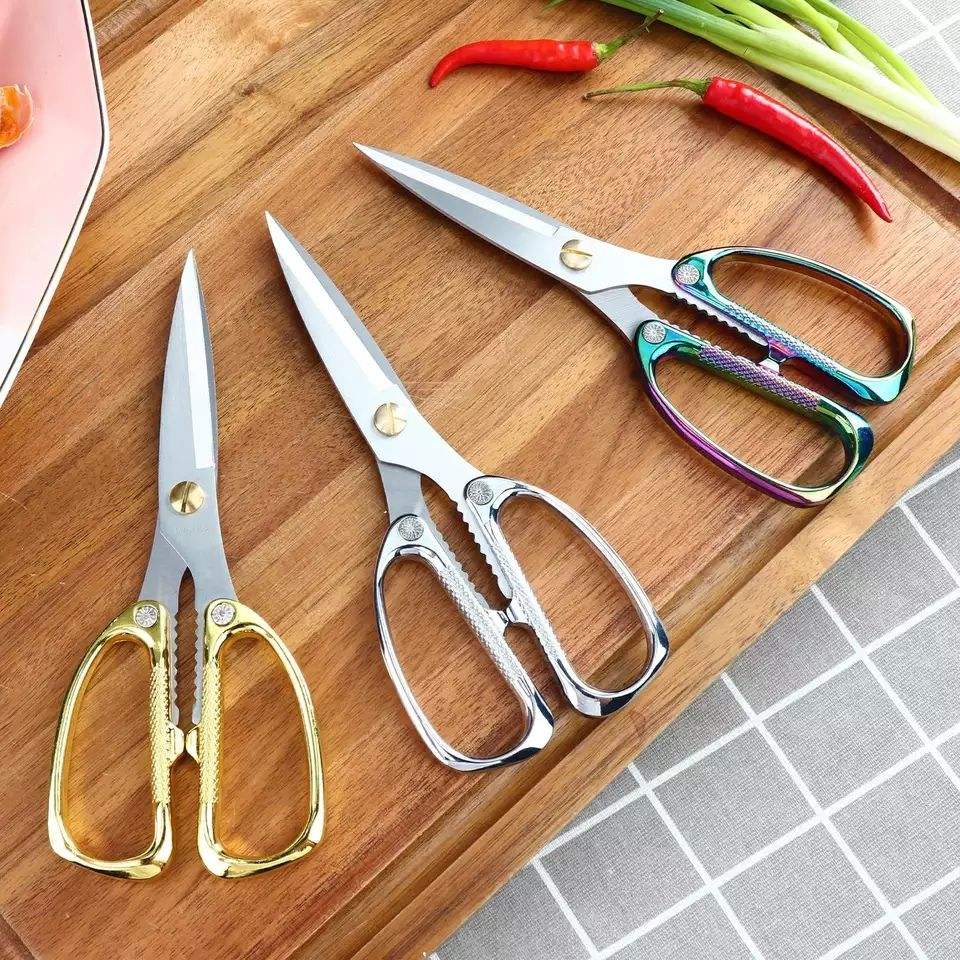
Some Yangjiang manufacturers position around multi‑purpose and heavy‑duty shears that can handle tougher tasks such as light gardening, crafts, or workshop use. A supplier like "Yangdong FineEdge Industrial Co., Ltd." might offer:
- Heavy‑duty blades with thicker stock and reinforced rivets.
- Multi‑function designs: bottle opener, nutcracker, fish scaler, wire‑cut notch.
- Options for both stainless and carbon steel with appropriate heat treatment.
Feedback from DIY users and light‑industrial customers often praises cutting power and robustness.
Best for:
Brands selling "all‑purpose" household shears and heavy‑duty kitchen/utility scissors.
Eco‑conscious consumers and brands increasingly care about sustainability. A factory like "Wuxi EcoHome Cutlery Co., Ltd." may differentiate itself through:
- Use of recycled or bio‑based plastic for handles, where technically and commercially feasible.
- FSC‑certified paper packaging, reduced plastic use in retail packs, and clear sustainability messaging.
- Cooperation with buyers to create eco‑themed product lines and gift sets.
This positioning resonates strongly with European and certain North American retailers who must meet internal ESG targets.
Best for:
Brands and importers building eco‑friendly home and kitchen product portfolios.
For new brands, crowdfunding projects, or niche ecommerce sellers, large MOQs can be a serious barrier. Suppliers such as "Guangzhou HandyLife Household Products Co., Ltd." focus on:
- Lower MOQ thresholds, especially for mixed‑color or mixed‑pattern series.
- Quick sampling and iterative design refinement.
- More flexible cooperation on packaging and branding experiments.
Customer feedback in this segment often emphasizes friendly communication, willingness to test new ideas, and reasonable trial order terms.
Best for:
New brands, small ecommerce sellers, and niche product developers testing the market.
While many factories focus on purely household use, some like "Shanghai PrecisionEdge Instruments Co., Ltd." incline toward higher‑end craft, sewing, and tailor scissors, which often cross over with home use:
- Finer blade geometry for fabric and detailed cutting.
- More premium finishes and materials, sometimes including plated or coated blades.
- Higher QC standards to meet the expectations of hobbyists and semi‑professional users.
Although not purely "household" in positioning, these products often become the "favorite pair" in a home due to superior feel and cutting precision.
Best for:
Craft, sewing, and premium home accessories brands that want to offer upgrade scissors.
Finally, we have factories like "Zhejiang Everyday Essentials Co., Ltd." that supply mass‑market bundles:
- 2‑packs or 3‑packs of household scissors in assorted sizes.
- Standard designs optimized for supermarket and hypermarket channels.
- High annual volumes and aggressive pricing.
Retail buyer feedback is usually centered on supply stability, packaging consistency, and minimal logistics issues at scale.
Best for:
Supermarkets, hypermarkets, and discount chains focused on large‑scale, low‑margin distribution.
Beyond the factory names, successful buyers always come back to real‑world usage. In interviews with brand managers, QC engineers, and end‑users, several recurring themes stand out.
The first thing users notice is how easily scissors cut out of the box. The second thing they notice—weeks later—is whether they are still sharp. For a typical household:
- Scissors must cut paper, plastic packaging, thin cardboard, light fabrics, and often some food prep.
- Many users rinse or wash scissors frequently, sometimes in dishwashers, accelerating wear and corrosion.
- If blades lose their edge too quickly, negative reviews and returns go up fast.
This is where factories like Kingford, with controlled heat treatment and multi‑stage grinding, consistently outperform low‑end suppliers in long‑term satisfaction.
In real families, one pair of scissors is often shared by adults, children, and sometimes elderly parents. That means:
- Handle shape and size must work for different hand sizes.
- Soft‑touch coatings can improve grip, especially when hands are wet.
- Rounded tips, safety locks, and blade covers reduce accident risk.
From an expert's perspective, simply copying a silhouette is not enough. The handle hardness, surface texture, and hole geometry must be tested with real users to avoid pressure points and blisters during extended use.
User experience begins before the first cut. The way scissors are presented in packaging and on product pages strongly influences perceived quality:
- Clear communication of use cases (kitchen, office, kids, craft) helps avoid misuse.
- Honest descriptions of materials (e.g., 420 stainless steel, food‑contact safe handles where applicable) build trust.
- Modern, clean design supports both brick‑and‑mortar and ecommerce displays.
Factories experienced with major retailers usually offer artwork support, packaging advice, and DTC‑friendly lifestyle mockups.
Even the best factories will occasionally face issues: a batch of rust spots, color mismatches, or damage in transit. What differentiates reliable manufacturers is:
- How quickly they analyze root causes.
- Whether they propose preventive actions for future orders.
- Their attitude toward compensation, rework, or replacement.
From a buyer's point of view, this is where long‑term cooperation either strengthens or breaks. Kingford and other top‑tier factories often keep structured CAPA (Corrective and Preventive Action) processes to maintain trust with overseas partners.
Drawing on years of cooperation cases, here is a practical framework you can apply when screening and comparing Chinese household scissors manufacturers.
Before sending RFQs, clarify your product strategy:
- Budget mass‑market vs. mid‑range vs. premium.
- Core sales channels: discount chains, supermarkets, Amazon, specialty stores, or DTC.
- Key selling points: price, durability, safety, design, or sustainability.
Then:
1. Shortlist factories whose existing products already align with your target segment.
2. Ask each supplier to recommend 2–3 SKUs that perform best in that segment.
3. Order samples and run internal user tests with your own staff or focus groups.
When you start conversations with Chinese household scissors manufacturers, use questions like:
- What steel grades do you use for your main household scissors lines, and what is the typical hardness range?
- Can you share examples of your current export customers' markets (e.g., EU, US, Japan) and any relevant certifications?
- What is your average defect rate on household scissors over the last 12 months, and how do you measure it?
- How do you handle after‑sales issues and what is your standard compensation policy?
- What are your typical MOQs for OEM orders, and can you support mixed colors or mixed sizes in one carton?
Suppliers that answer clearly, with numbers and procedures, usually have better internal management.
Before placing a bulk order, walk through this simple checklist:
1. Function tests:
- Test cutting performance on at least 5 materials relevant to your customers.
- Check comfort over at least 5–10 minutes of continuous cutting.
2. Corrosion tests:
- Simple home test: repeated wetting and drying cycles, or exposure to salt water spray for a limited time.
3. Packaging and labeling:
- Confirm artwork approvals, barcode placement, warnings, and language versions.
4. Quality agreement:
- Align with the factory on AQL levels, inspection procedures, and acceptance criteria.
5. Pilot order or PP samples:
- Approve pre‑production samples and, if possible, conduct a small pilot order before full rollout.
Choosing the right household scissors manufacturer in China is not just about finding the lowest price; it is about aligning factory strengths with your brand positioning and delivering reliable user experience year after year. By focusing on long‑term sharpness, comfort, safety, and after‑sales reliability—and by partnering with professional OEM manufacturers like Kingford Homeware Co., Ltd.—you can build scissors programs that generate both strong ratings and healthy margins.
When you combine structured supplier evaluation with real user testing and transparent communication, your "Top 10 list" quickly turns into a shortlist of 2–3 strategic partners that support your brand's growth for the long term.
Contact us to get more information!
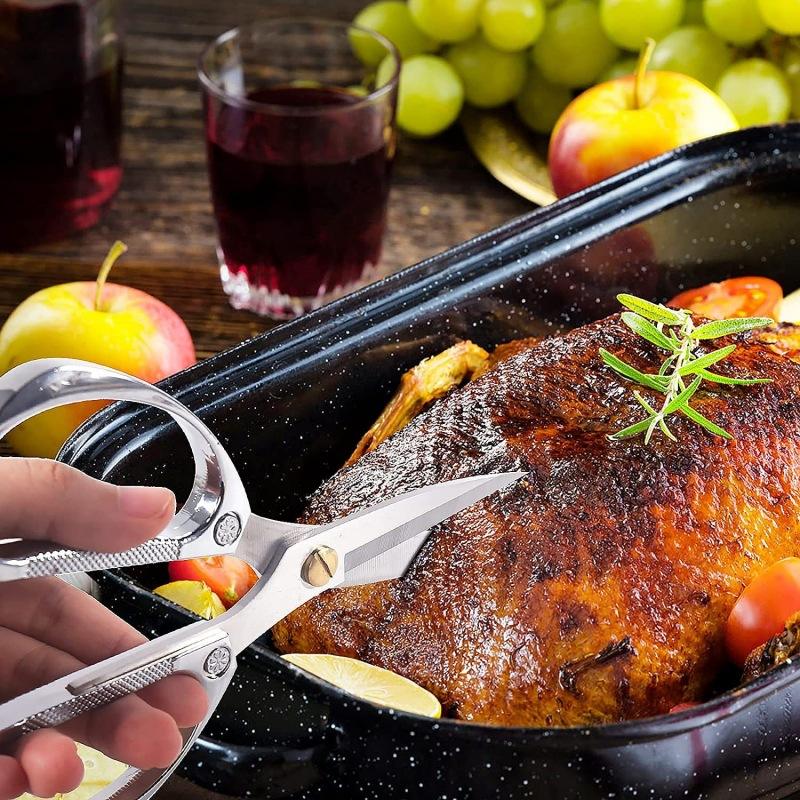
Ask for business licenses, factory photos, certifications (such as ISO 9001), and references from existing overseas customers. Conduct third‑party inspections or audits when order value is significant, and always validate samples thoroughly before placing bulk orders.
For export‑grade household scissors, many professional buyers target a defect rate below 0.5–1.0% at the end‑customer level. In practice, the acceptable level depends on your price segment, but long‑term partners will share their own internal statistics and improvement plans.
Blade steel grade and hardness directly influence sharpness, edge retention, and rust resistance. Too soft, and the blade dulls quickly; too hard, and it may chip. Professional factories fine‑tune heat treatment to balance cutting performance and durability for typical household use.
Yes, many integrated scissors manufacturers in China, such as Kingford Homeware, are capable of producing multiple categories including household, kitchen, office, and baby food scissors under one roof. This often simplifies supply chain management and branding consistency.
For new ecommerce brands, prioritize consistent quality, appealing design, strong packaging, and responsive communication. Work with a manufacturer that supports lower MOQs, quick sampling, and provides marketing‑friendly assets such as lifestyle photos and packaging mockups.
1. Kingford Homeware Co., Ltd. – Official company profile and OEM scissors manufacturing capability overview. Available at: https://www.ydscissors.com/
2. China Household Scissors and Cutlery Manufacturing Cluster – Industry background and export overview (Yangjiang, Guangdong). Available at: https://www.yangjiang.gov.cn
3. Global Scissors and Hand Tools Market Insights – Market size, export destinations and segment trends for household and kitchen scissors. Available at: https://www.statista.com
4. ISO 9001 Quality Management Systems – Requirements and best practices for manufacturing companies. Available at: https://www.iso.org/iso-9001-quality-management.html
5. OEM Sourcing Guide for Scissors Manufacturers in China – Practical tips for overseas brands and wholesalers. Available at: https://www.alibaba.com


